
Elle Scandinavia feature
Oslo, where the fjords cut clean lines into the horizon and glamour prefers understatement, has always had a particular way of producing its icons: softly at first, then all at once. Triana Iglesias belongs to that lineage—but refuses the softness.
Born between Norwegian restraint and Spanish heat, she moves through culture like a shift in temperature. Model, DJ, performer, actress—labels arrive late to her presence, as if trying to catch up with something already in motion. Nothing about her career reads linear; it reads choreographed chaos with perfect timing.
From early childhood, performance was not ambition but instinct. Music, movement, camera light—less a decision than a language she never stopped speaking. Today, that instinct has expanded into something more calibrated: a public persona that understands both spectacle and control, presence and distance, the art of being seen without ever becoming fixed.
“I turn everything into a game,”
she says, with the kind of lightness that usually hides precision. It is not frivolity—it is strategy disguised as ease. In her world, play is not escape, but method: a way of staying fluid inside an industry that prefers definition.
Triana’s work has moved across modelling, editorial culture, nightlife circuits, and screen presence, including international men’s magazines that once defined a very specific era of celebrity image-making. But the interesting shift is not what she has done—it is how she carries it now: with a kind of post-gloss awareness, where image is no longer naïve, but knowingly constructed.

There is, at the centre of her practice, a refusal to be reduced. Even in the language of entertainment, she insists on process over product. Music remains her most intimate register—rhythm as emotional intelligence—though she admits it can leave her exposed in ways the camera does not.
“I miss being on stage,” she reflects. Not nostalgia, but recognition: performance as direct contact, before everything became filtered, framed, and endlessly replayed.
Burlesque, too, sits in her history like a recurring aesthetic thought—less revivalist fantasy, more fascination with bodies as narrative objects. Feather fans, theatrical light, the architecture of seduction. Not as spectacle alone, but as controlled storytelling through presence.
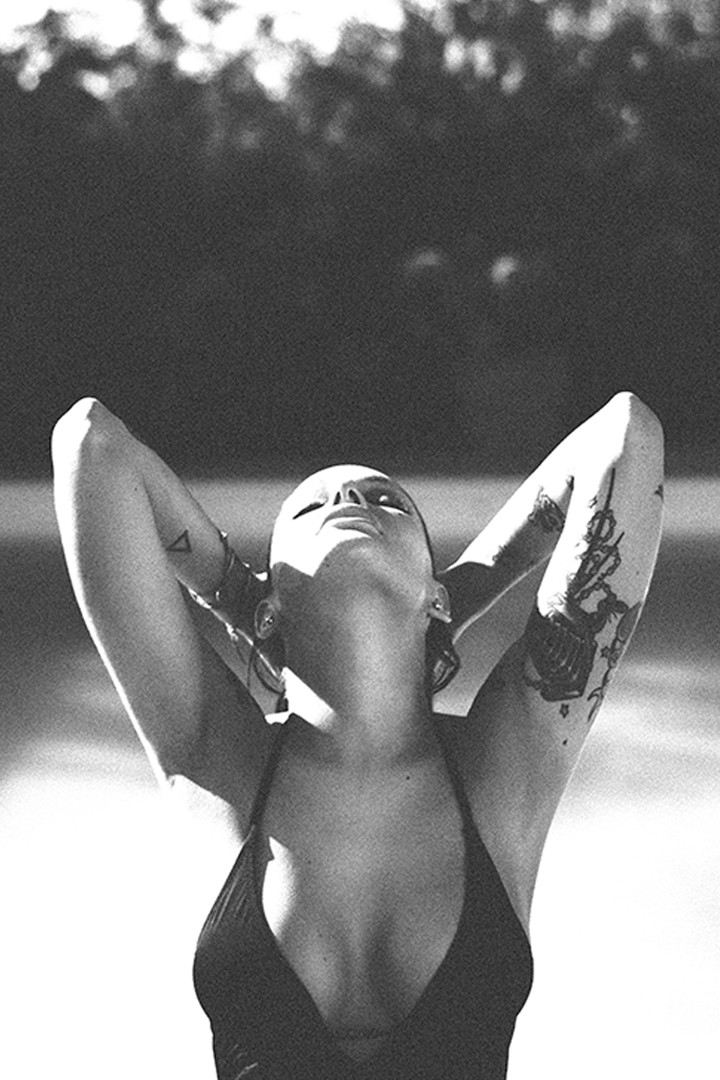

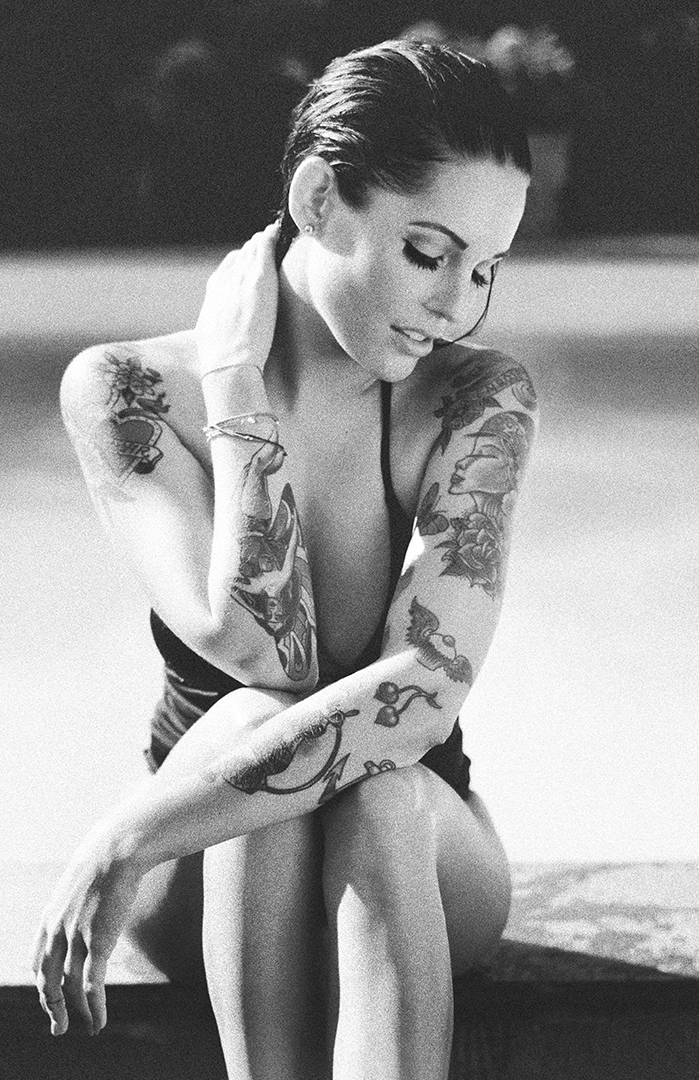
Interview by Arthur Sopin
AD by Andreas Roed
Photography by Olav Stubberud
 #dt500mag