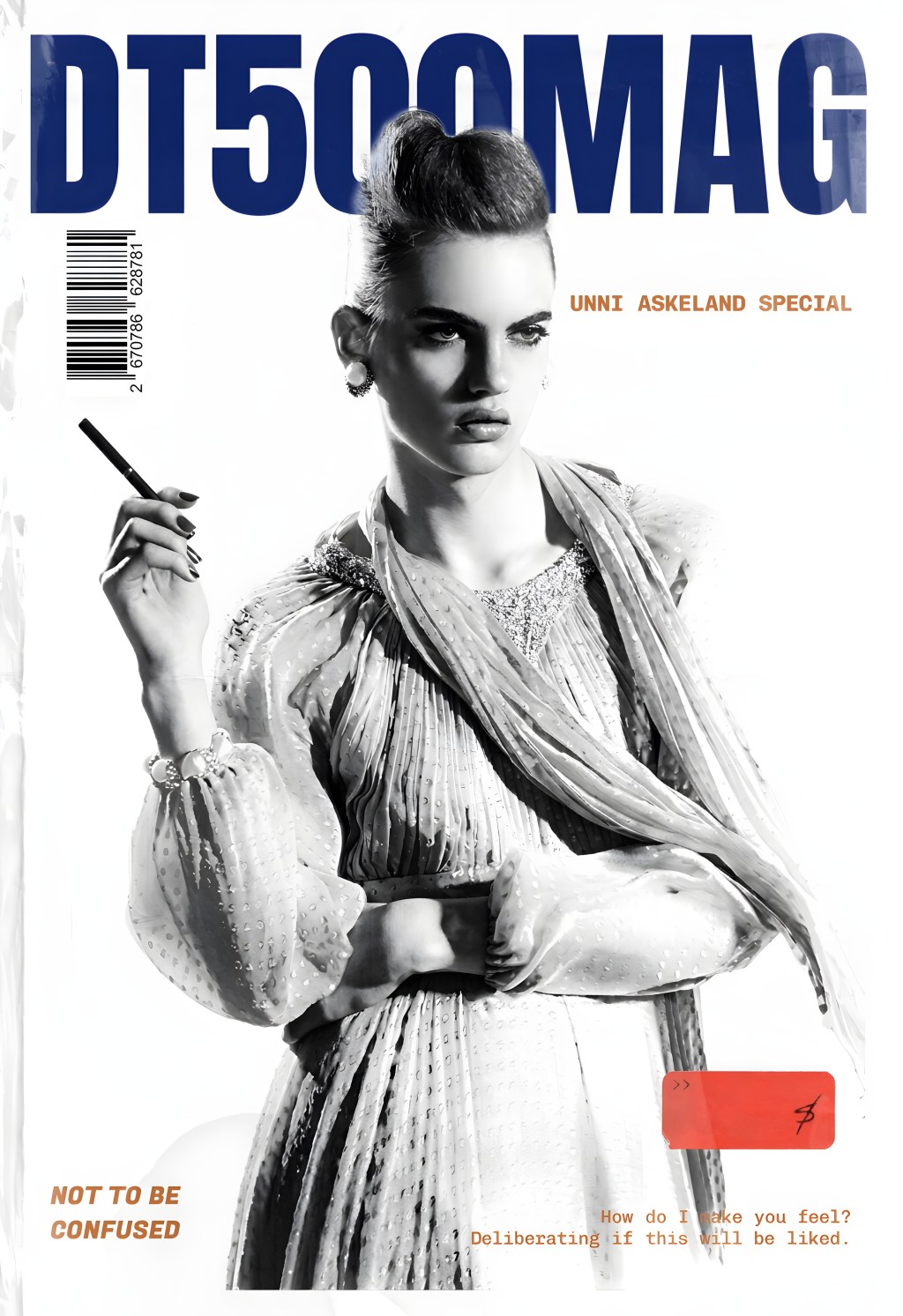
At Frieze London 2026, discovery is increasingly something that can be curated, organised and directed. But can an institution design the conditions for surprise without determining what we are supposed to find?
Arthur Sopin
There is a particular pleasure in discovering something at an art fair that nobody has told you to look at.
You turn a corner. A painting stops you. You do not know the artist’s name. You may not even know why you are looking. For a few seconds, before the wall text, the gallery’s reputation and the market arrive to explain what you are seeing, the encounter belongs entirely to you.
This is one of the great fantasies of the art fair: that among hundreds of galleries, thousands of works and an overwhelming quantity of information, something will simply find you.
But at the contemporary art fair, very little is accidental.
Before we encounter an artist, a gallery has selected them. Before that gallery arrives at the fair, it has passed through another selection process. The fair then determines where it appears, what surrounds it and which curatorial section gives its work a particular meaning. The visitor may feel that they have stumbled upon something. In reality, they have entered an elaborate architecture of attention.
At Frieze London 2026, that architecture is becoming increasingly visible.
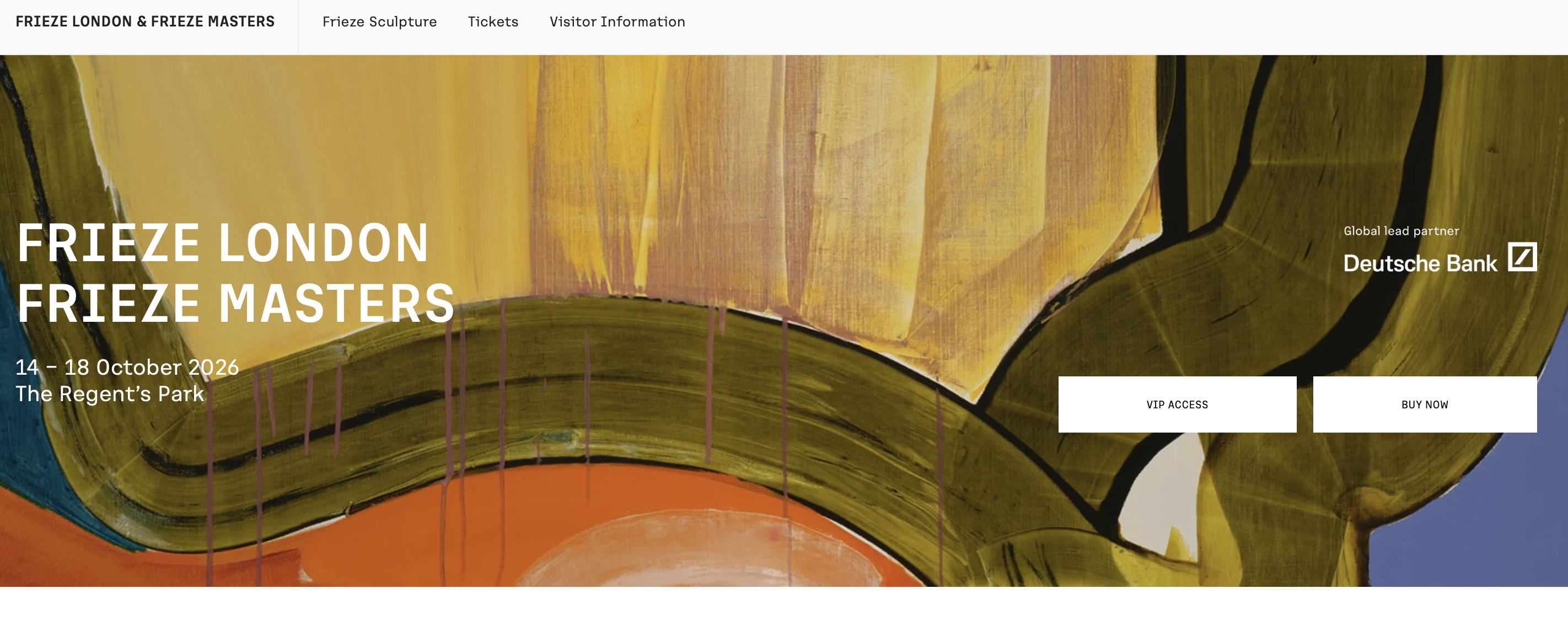
The fair returns to Regent’s Park in October with five sections: Galleries, Focus, Artist-to-Artist, Editions and a new curated initiative, The Code Universe. Frieze describes this year’s programme as putting “discovery first”, with the curated sections explicitly presented as platforms for emerging artists, younger galleries and international exchange.
This is not a criticism of curation.
It is a question about what the word discovery means now.
Because if discovery can be designed, selected, framed and spatially organised before the visitor arrives, is it still discovery?
Or has discovery itself become an institutional technology?
The fair that wants to be more than a market
The contemporary art fair has always had an identity problem.
It is a marketplace, but it does not want to be understood merely as one. It sells objects, yet increasingly presents itself as a place where ideas are generated, histories revised and cultural conversations take place.
Frieze is particularly revealing because it operates simultaneously as a fair, a media organisation and a cultural platform. Its magazine publishes essays, criticism, profiles and interviews; its fairs bring together galleries, artists, curators, collectors and audiences; its programmes increasingly resemble the kinds of curatorial structures associated with museums and biennials. Frieze describes London as one of the world’s most influential contemporary art fairs, focused on living artists and innovative practice, with independent curators advising on feature sections.
The distinction between marketplace and cultural institution therefore becomes harder to maintain.
And perhaps that is precisely what makes the fair interesting.
If an art fair merely sells art, the central question is economic:
What can be bought?
But if an art fair also organises cultural attention, another question emerges:
What deserves to be seen?
And once that question is asked, there is a third:
Who gets to decide?
The architecture of discovery
Frieze London’s 2026 structure offers an unusually clear answer.
Focus is dedicated to international galleries founded within the last twelve years and is known for experimental solo presentations. This year’s section contains 34 presentations selected by a committee of curators and gallerists. Since 2023, Frieze says, the section has featured 136 galleries across 246 presentations.
Artist-to-Artist works differently. Seven solo presentations are selected not by a conventional fair committee but by established artists, each nominating another artist whose work they believe deserves greater attention. The mechanism is deliberately relational: one artist directs the audience towards another.
Then there is The Code Universe.
Curated by Carol Yinghua Lu, the new section brings together artists from the mid-1980s to the present to examine social transformation through mass culture: everyday objects, consumer goods, mass media and the flows of information through which popular culture is produced and consumed.
Each of these structures does something more than organise space.
They organise significance.
They tell us that this artist belongs here, that this gallery represents a particular generation, that this practice deserves greater attention, that these works should be understood through this particular historical or cultural lens.
The visitor still has freedom.
But the freedom operates inside a frame.
This is the paradox of sophisticated curation: it can expand what we see while simultaneously influencing how we see it.
The curator as infrastructure
For much of modern art history, the curator was understood as a mediator between artwork and audience.
Today the role is closer to infrastructure.
The curator connects artists, histories, geographies, institutions and markets. They create the conditions under which dispersed practices can become legible to one another.
This can be enormously productive.
An artist working outside an established centre can acquire visibility. A young gallery can be placed in conversation with institutions and collectors it could not otherwise reach. An artist can use another artist’s authority to redirect attention towards a practice that might have remained peripheral.
Artist-to-Artist makes the mechanism almost wonderfully explicit: recognition is transferred from one artist to another.
There is something generous about this.
There is also power in it.
The person who decides whom we should notice is participating in the production of cultural value, whether or not they are determining a price.
This is why the language of discovery deserves scrutiny.
Discovery sounds innocent.
Selection is not.
To select is to exclude something else.
To create a category is to establish a boundary.
To call an artist emerging is to position them in relation to an existing centre.
To announce that a section represents “the next generation” is to make a proposition about the future of art.
None of these things is necessarily wrong.
But none is neutral.
The gatekeeper has changed
The old art-world gatekeeper was easy to identify.
It was the museum director, the critic, the dealer, the curator, the collector.
Today, power is more diffuse.
The gatekeeper has become the facilitator. The authority has become the platform. The hierarchy has become the network.
This change is partly the result of legitimate criticism.
The contemporary art world has spent years questioning its geographical, institutional and historical exclusions. New platforms have emerged to widen access to artists, galleries and practices that previously sat outside dominant circuits.
Frieze’s own programming reflects that ambition.
But redistribution does not mean the disappearance of power.
It can mean something more sophisticated:
power that becomes harder to see because it appears as access.
That is the interesting problem.
A curator can open a door.
But they are still deciding where the door is.
The algorithmic museum
This question becomes more urgent in 2026 because the art fair no longer exists outside a culture of recommendation.
We are surrounded by systems that decide what we encounter.
Spotify predicts the music we might like. Streaming platforms determine which films are placed in front of us. Social media feeds learn what holds our attention. Search engines rank what becomes visible. Generative AI increasingly proposes images, texts, references and ideas before we have formulated the questions ourselves.
The contemporary cultural experience is therefore moving away from the old model of discovery — wandering, searching, stumbling — towards a model of guided encounter.
The art fair is not an algorithm.
But it operates on a related principle.
It selects.
It ranks.
It groups.
It frames.
It creates pathways through abundance.
And abundance is the key.
There is now simply too much contemporary art for an individual visitor to encounter without mediation. The function of curation is therefore not only to exclude. It is to make an impossible quantity of culture navigable.
This is why the critique cannot simply be that institutions curate too much.
We need curation.
The more interesting question is whether we can remain conscious of the fact that we are being guided.
What happens to surprise?
The danger of increasingly intelligent cultural programming is not that it becomes boring.
It is that it becomes too convincing.
When every work arrives with a context, every artist with a narrative and every section with a curatorial proposition, the visitor risks becoming the final stage in a process of meaning-making that began long before they entered the fair.
The experience can become seamless.
Perhaps too seamless.
The artist is selected.
The gallery is selected.
The section is selected.
The placement is selected.
The interpretation is supplied.
The audience’s task is to complete the circuit.
But art has historically depended on something less orderly.
Confusion.
Misrecognition.
Disagreement.
The possibility that we might encounter a work incorrectly.
A visitor might hate the work that a curator considers essential.
They might become fascinated by the least important work in a room.
They might misunderstand an artist’s intention and discover something the institution had not anticipated.
They might simply walk past the work they were supposed to see.
These are not failures of the cultural encounter.
They may be its most interesting successes.
The audience is not innocent either
There is, however, an uncomfortable fact on the other side of the argument.
We want curation.
We ask for recommendations.
We want someone to tell us which exhibitions matter, which artists to watch, which books to read and where we should begin.
The scale of contemporary culture makes complete independence almost impossible.
No visitor can see everything at Frieze.
No critic can follow every artist.
No curator can know every practice.
Selection is inevitable.
The question is therefore not whether institutions should curate our attention.
It is whether they can do so without exhausting our autonomy.
A good curator does not tell us what to think.
They create the conditions in which we might think differently.
That distinction is crucial.
The politics of being seen
There is another reason this matters.
Visibility is not merely aesthetic.
For artists and galleries, being selected can change careers. A place in a curated section can introduce an artist to collectors, critics, institutions and other artists. A recommendation from an established artist can confer legitimacy. A prominent position can turn obscurity into recognition.
In this sense, the architecture of discovery is also an architecture of opportunity.
To decide who is seen is partly to decide who gets resources, whose work enters conversations and whose practice becomes part of the history being written.
Frieze understands this.
Its own description of Focus notes that artists introduced through the section can go on to gain wider critical, curatorial and institutional recognition.
That sentence contains the real stakes.
The fair is not simply showing what already matters.
It is participating in the process by which something comes to matter.
The question is therefore no longer simply:
Who gets to exhibit?
It is:
Who gets to become visible enough to be remembered?
Can an institution curate surprise?
Perhaps this is where the argument needs to become less suspicious of institutions, not more.
Curation is not the enemy of discovery.
Without curation, discovery can become impossible.
The challenge is to preserve a gap between the frame and the encounter.
To say:
Here is something we believe deserves your attention.
Rather than:
Here is what you are supposed to find.
That difference may appear small.
It is not.
The first leaves room for the visitor.
The second closes the circuit.
And perhaps the most generous form of institutional authority is therefore not to disappear, but to acknowledge itself.
The curator should be visible enough for us to understand the route we have been given — and free enough for us to leave it.
Beyond Frieze
This is why the question raised by Frieze London 2026 extends far beyond the fair.
The contemporary cultural institution increasingly operates in a world where attention itself has become scarce, measurable and programmable.
Every platform is competing to decide what appears before us.
Every cultural organisation is trying to make abundance navigable.
Every curator is making choices about what should enter the frame.
And every audience member is negotiating between wanting guidance and wanting freedom.
The art fair makes this contradiction unusually tangible.
It is a commercial environment that increasingly behaves like a cultural institution.
It is a physical space that increasingly resembles a recommendation system.
It promises discovery while constructing the conditions in which discovery takes place.
None of this makes the experience false.
It makes it more interesting.
Because perhaps the real measure of a cultural institution is not how successfully it predicts what we will value.
It is whether it leaves enough room for us to value something it did not predict.
That may be the paradox at the centre of Frieze.
The more sophisticated the institution becomes at organising attention, the more precious unorganised attention becomes.
We still need people to select.
We still need people to frame.
We still need people to point and say: look here.
But after they point, there must remain the possibility that we look somewhere else.
Perhaps that is where discovery begins.
Photography Andreas Rod

 #dt500mag