
Each June, London recalibrates around independent cinema. Raindance transforms the city into a dense circuit of premieres, full-day screenings, and post-film debate spilling into Soho streets. It is less a festival than a temporary nervous system for global independent film, where filmmakers, critics, and audiences collide in real time, and formal risk still carries cultural weight
It is within this environment that WHITENESS arrives.
But as a system.
Not as a film.
A destabilised cinematic structure testing how far a feature can stretch before it stops behaving like one.
At a moment when independent cinema is increasingly defined by hybrid form and political urgency, WHITENESS pushes further into instability: a work that does not reinterpret history so much as expose its editability. History here is not preserved. It is constructed through an image. Reassembled through repetition. And quietly rewritten by form itself.
Its ambition is total. Its coherence is deliberately unstable. That tension becomes its organising principle.
A FOUR-PART SYSTEM OF COLLISION
Conceived by writer-director Alessio Cappelletti and produced by Dodge Cine with Lumapix Creative Studios, WHITENESS unfolds as a 105-minute multi-form work combining narrative fiction, archival restoration, animation, satire, and Southern Gothic horror.
Rather than blending these modes, it refuses synthesis. Each segment operates independently, colliding with the next to generate meaning through friction.
The result is not narrative progression, but ideological stress testing.
AND THAT’S THAT
The film opens in controlled stillness.
And That’s That is a chamber satire set inside an abstracted upper-class interior where emotional collapse is masked by aesthetic discipline. A couple performs intimacy like choreography—precise, rehearsed, already exhausted.
The humour is restrained to the point of discomfort. What emerges is not relationship drama, but class performance: identity maintained through repetition until it disappears into habit.
Power here does not assert itself.
It rehearses itself.
TEAMWORK
The second segment cuts the structure open.
A restored WWII-era American government film, originally produced as propaganda, is inserted without mediation.
The shift is immediate. The material does not feel historical—it feels active.
The segment’s argument is formal rather than interpretive. It shows how institutional images do not document reality. They organise it. Meaning is not recorded. It is manufactured through framing, omission, and repetition until it becomes consensus.
SCRUB ME MAMA WITH A BOOGIE BEAT
The third movement introduces the film’s most volatile rupture.
The 1940s animated short Scrub Me Mama With a Boogie Beat, long criticised and historically banned for racist caricature, appears without contextual shielding or explanatory distance.
No framing. No mediation. No relief.
Its function is exposure.
The segment forces confrontation with how entertainment once encoded ideology as rhythm, humour, and repetition. What was designed as amusement reveals itself as cultural conditioning.
The implication is direct:
Representation does not reflect prejudice.
It produces it.
And then normalises it.

WRETCHED EARTH
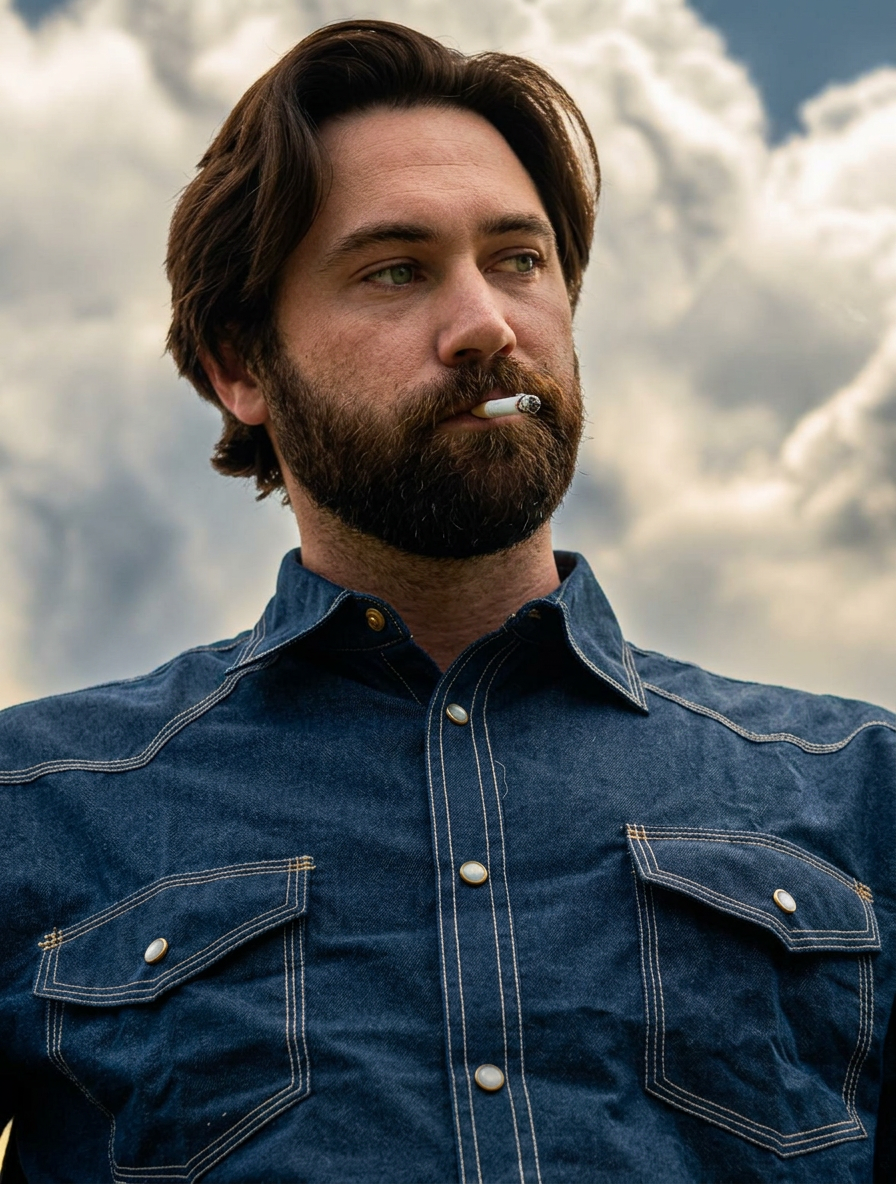
The final section shifts into Southern Gothic horror set in the Jim Crow-era American South.
Shot in Infrared Black & White, Wretched Earth follows a young boy navigating inherited systems of civic duty that gradually reveal themselves as mechanisms of violence disguised as continuity.
The world begins to destabilise.
Trees feel reactive. Space loses coherence. Memory behaves less like recall than interference.
Unlike earlier sections, this chapter sustains narrative tension—but refuses resolution. It generates atmosphere instead of closure, turning landscape into psychological pressure.
This is where WHITENESS becomes most fully embodied.
Less concept.
More experience.
The film stops explaining systems.
It begins to behave like one.
A CINEMA OF CONTROLLED FRACTURE
What defines WHITENESS is not hybridity, but refusal.
Refusal to stabilise tone.
Refusal to unify form.
Refusal to resolve the contradiction.
Each segment collides with the next, producing meaning through friction rather than synthesis. Satire breaks against the archive. Fiction breaks against propaganda. Horror breaks against memory.
At its most effective, the film does not ask to be interpreted.
It demands to be processed.
And that process is not comfortable.
Because WHITENESS is not interested in clarifying history.
It is interested in revealing how easily history is constructed.
And how convincingly it can be mistaken for truth.
Written by Andreas Rød / Artur Sopin

 #dt500mag