by Arthur Sopin
The art world has spent the past few years performing “resilience” with the solemnity of a corporate wellness seminar. Frieze London 2026 has decided that is quite enough of that.
From 14 to 18 October in Regent’s Park, the fair returns with the quiet determination of an institution that has watched too many panels about “connection” and “community” and would now like to see some actual evidence. This is not another self-congratulatory marketplace dressed up as cultural leadership.
It is a carefully staged test of whether a commercial fair can still generate friction
The urgency is almost embarrassingly straightforward. The language we use about culture has collapsed under the weight of its own emptiness. “Innovation.” “Impact.” “Dialogue.” These words now function less as descriptions than as polite noise.
Frieze’s 2026 programme treats that collapse as its starting point rather than something to be ignored in the name of good manners.
The centrepiece is almost too on the nose. Theo Triantafyllidis’s Feral Metaverse (Spider), this year’s Frieze London Artist Award commission, is a climbable sculpture that doubles as a multiplayer game in which the only way to succeed is to cooperate.
Visitors must form temporary collective bodies with strangers — towers, wheels, group hugs, spiders — or they fail.
In a culture that has spent two decades perfecting the art of ranking individuals and monetising attention, the gesture borders on the impolite.
Supported by Google Arts & Culture and co-commissioned with the non-profit Forma, the work does not lecture. It simply makes the dominant logic of the digital age look faintly ridiculous by requiring people to hold each other up in public. Triantafyllidis has been clear about his intent.
“I wanted to propose a different direction that the metaverse could have taken,” he told Artnet. Video games, he argues, are ideal for “playtesting” social dynamics to see “what behavioural patterns emerge.”
The physical sculpture is critical, he has said, for “breaking this barrier of entry.” Players may feel intimidated by the spider at first; the point is to discover, through awkward real-life fumbling and mutual reliance, that it can become “a cuddly creature.”
In a Frieze statement, he described the commission as “a supported leap of faith” at a key moment in his practice.
Eva Langret, Frieze’s Director of EMEA, has been equally direct:
the work “demands physical presence — you have to be there, in the room, climbing it, playing it, figuring it out with strangers.”
That insistence on bodily interdependence sits in pointed contrast to the frictionless, individualised attention economy most digital platforms reward.
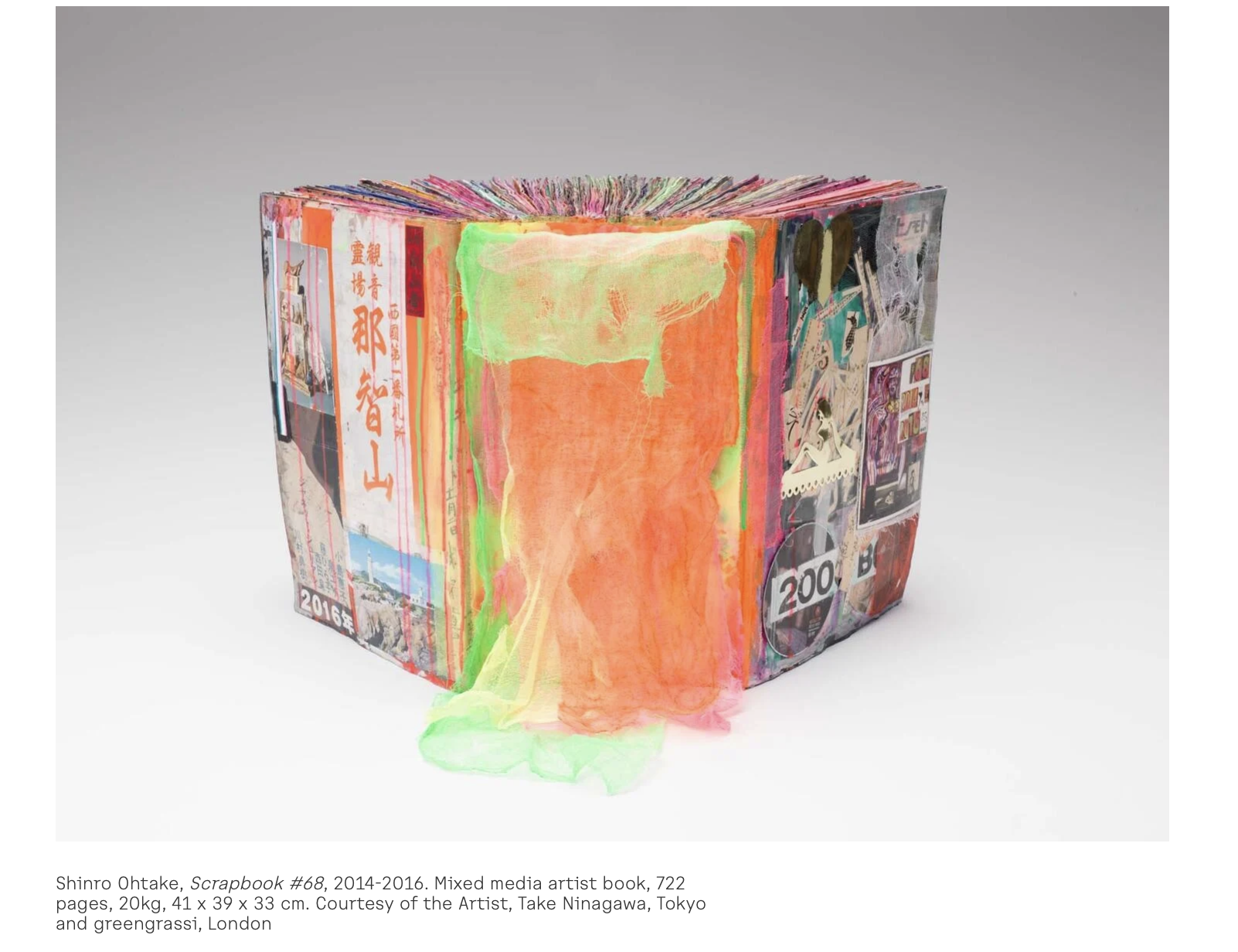
Around it sits the new curated section, The Code Universe, organised by Carol Yinghua Lu, director of Beijing’s Inside-Out Art Museum and co-curator of the 2027 Istanbul Biennial. It examines how artists have responded to mass culture, media systems and consumer society since the late 1970s — not with the usual moralising distance, but with the recognition that these systems now live inside our heads. Solo presentations include work by Carolyn Lazard, Selma Selman, Nikita Kadan and Shinro Ohtake. The section is less interested in outrage than in diagnosis.
In the current climate, that already feels like a minor act of rebellion.
Artist-to-Artist continues its mildly subversive habit of letting artists nominate other artists rather than leaving the decision to market temperature; this year’s nominators include Gala Porras-Kim, Otobong Nkanga and Yinka Shonibare. Focus keeps giving space to younger galleries still willing to treat risk as a method rather than a marketing category. The overall message is unusually clear for a commercial fair:
this edition is less concerned with confirming the present than with making it slightly harder to inhabit without embarrassment.
Why now? Because the old scripts have worn through. The market has become extraordinarily skilled at absorbing the appearance of radicalism while quietly neutralising anything that might interrupt the flow of capital and attention. Last year’s Frieze London and Frieze Masters drew around 90,000 visitors and delivered steady, if unspectacular, sales in a global market that had contracted roughly 12 per cent in 2024. Dealers reported stronger mid-market activity, particularly under $200,000, and a more deliberate pace of buying. Neil Wenman, creative director at Hauser & Wirth, put it plainly:
“Artists that were a bit overly commercial have faltered. But, ultimately, quality always rules.”
Collectors were taking longer to decide. Thaddaeus Ropac noted that
the market was “starting to pick up somewhat after the past slow months.”
The fair itself has spent years refining the language of discovery and emerging voices while remaining, at root, a high-stakes commercial event for nearly 300 galleries.
Frieze 2026 is testing whether a major fair can still generate friction instead of merely reflecting the prevailing weather. It is a more ambitious, and more exposed, position than most institutions currently appear willing to occupy. The Google sponsorship of a work that insists on physical co-presence and mutual dependence is itself a productive tension:
corporate tech capital is underwriting a temporary laboratory that makes the logic of platforms look slightly absurd.
The impact will not announce itself in press releases about record sales. It will appear, if at all, in the conversations that refuse to stay inside the tents. In the brief, slightly awkward moments when a room full of sophisticated people are forced to depend on one another. In the possibility that both cultural professionals and ordinary visitors might leave slightly less convinced by the slogans they arrived with.
This is the fair’s most useful function. It offers a temporary laboratory in which the language of the moment can be tested against actual experience. You will encounter work that treats “connection” as something requiring physical presence and mutual reliance rather than a platform setting. Work that regards technology as a collaborator instead of either saviour or apocalypse. Work that declines the comforting fiction that culture is either pure resistance or pure commodity.
The emotional register is precise and unsentimental. Not uplift. Not despair. Something closer to sharpened attention — the quiet realisation that the ground beneath the usual phrases has shifted, and that someone has finally noticed.
You should go because most of the culture currently on offer is designed to reassure you that you already understand everything.
Frieze London 2026 appears designed to make that reassurance feel slightly less flattering. In an age that specialises in soft consensus, that is a rare form of hospitality.
The fair will not save anyone. It might, for five days in October, make the prevailing nonsense slightly more difficult to recite with a straight face. In the present climate, that already counts as a public service.
 #dt500mag