
Camilla Luna doesn’t play the algorithm. She outruns it.
In a culture addicted to trends, metrics and disposable virality, she has spent decades moving at a slower, deeper frequency. For Luna the underground was never a look you could buy. It was a way of seeing — curious, unguarded, allergic to the safe zone.
Long before electronic music became content, she was already inside Oslo’s early creative bloodstream, working beside Arildo and Trulz & Robin. The rooms that formed her — Skansen, Sikamikanico, Jazid, Killyrego — weren’t venues. They were low-ceilinged, smoke-thick pressure cookers where the bass hit your chest before the lights ever found your face. Places where sound, identity and freedom still outranked spectacle.
That spirit never left her.
Her music refuses every tidy box. Techno bleeds into ambient. House sits next to soul. Experimental electronics open into cinematic vocal landscapes. Luna treats genre like a temporary room she can walk through, not a permanent address.
“I’ve always followed my intuition,” she says. “I’ve never believed in staying inside one genre. The sound of Camilla Luna should always be evolving.”
That philosophy hits hardest in Open Up — a project built on vulnerability as method. Put on headphones and the first thing that arrives is warmth: analogue hiss, soft-edged pads, a voice that feels close enough to touch. Then the low-end opens and the track starts breathing. Hypnotic rhythms carry soulful, dreamlike vocals. The result feels intimate and expansive at once: music designed to move bodies and open something deeper.
For Luna the underground was never about exclusion. It was always about curiosity.

Where identity actually lives
Ask her where the Camilla Luna identity comes from and the answer cuts clean.
“It comes from something kind. I try to be honest and genuine; through that, I meet something sincere and authentic in others.”
She believes in the good in people and tries to cultivate it through sound. Her personal operating system is ruthlessly simple:
“I build my results by making mistakes. I live all in. I make mistakes, I learn, and I keep moving.”
She carries both sides of the spectrum without apology. “We all have yin and yang. If I had to name my inner man, he would be Manolo — he’s a little edgy.” That internal friction is non-negotiable. Creativity, for her, demands the full range: the facade and the exposure, the light and the difficult material that later becomes something meaningful.
You put up a front. Then you have to dare to drop it.
Grünerløkka before the postcard
Luna’s roots are concrete, not romantic. Father from Uruguay. Mother Norwegian. She grew up in Grünerløkka when it still had toilets on the stairs and showers in the kitchen — proper blue-collar Oslo, long before the neighbourhood became a lifestyle brand.
“I am very fond of Oslo, although sometimes I get tired of it.”
The place taught her community, responsibility and empathy. Her parents were politically engaged and refused to let her live in a bubble. That early clarity still shapes the work.
In 2009 she went to Uruguay to meet family she had never known. The experience recalibrated everything. Standing in rooms full of relatives who shared her blood but not her language, she felt something unlock — a sudden, almost physical recognition of the passion she had always carried but never fully named.
“I understood more about why I am the way I am… There was so much love.”
She describes the two inheritances as complementary forces: Norwegian calculation meeting Latin fire. Both stay present in the music. Neither gets edited out.
The voice that refuses the box
Music was always in the house — Joni Mitchell, Pink Floyd, Latin records, jazz. Her mother played piano and guitar. Her father taught her how to dance. As a child she was a natural exhibitionist. Later came stage fright “from hell.” She decided the only way through was to master it.
Music became both coping mechanism and identity.
“I’ve always used music to cope with my emotions. Becoming a singer was an organic process.”
She hopes people recognise her by the voice, not by a fixed sound. Working with producer BHLB gave her the space to chase that freedom:
“I want to tap into who I am when I am collaborating with someone. To create a context from chaos.”
The biggest creative danger, she insists, is the safe zone.
“When you dare to break out, that is when you create something.”
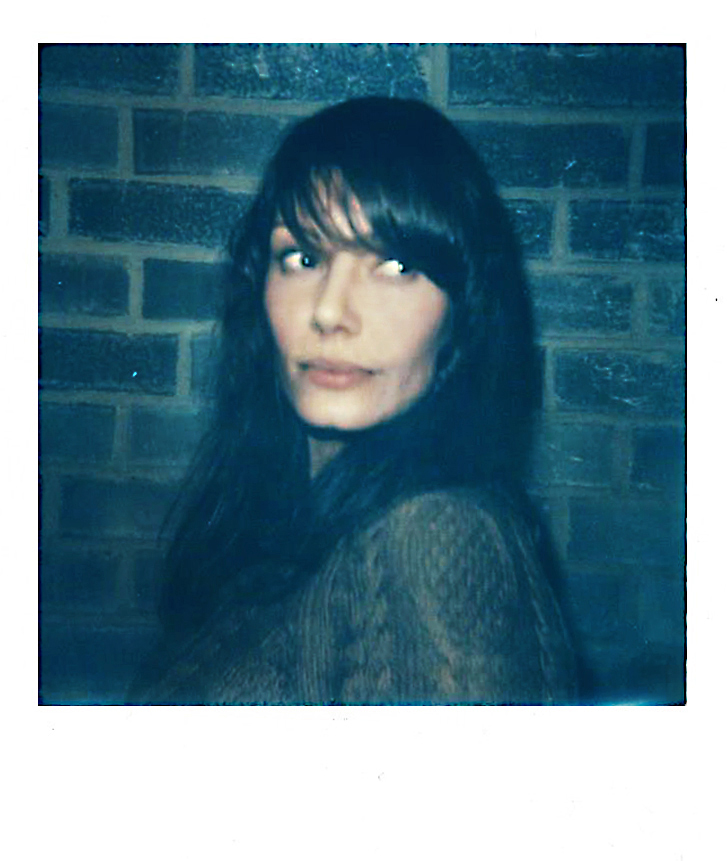
No trends. No compromise.
Luna grew up sneaking into parties too young, absorbing techno, house, hip-hop and everything else that moved her. That omnivorous appetite never left.
“Each genre has its own charm. It is not about the category; it is about how I feel in the moment.” Collaboration is treated as emotional exchange, not transaction. Success is measured by the people who actually sit down and listen — the ones who stay.
Her circle includes long-term allies: Arildo (“my number one supporter”), Trulz & Robin (“my old-school crew”). The relationships are personal first. That trust is what keeps the work evolving instead of repeating itself into irrelevance.
Open Up and the next frequency
Open Up was built on a single rule: expose more than you plan.
“The main idea was to be open to the process, to expose myself, and to feel more than I think.” Vulnerability here is not aesthetic. It is the entire point.
In an electronic landscape where “vulnerability” has itself become a marketable texture — soft vocals over tasteful pads, carefully framed confession as brand strategy — Luna’s version still feels riskier. It doesn’t perform openness. It simply refuses the mask.
“Few people dare to meet on a sincere level, without masks… We must dare to let people enter.”
The forthcoming album continues the same trajectory — electronic production, cinematic songwriting, her unmistakable vocal presence — while she keeps space for new collaborations and discovery. Barcelona remains a key stage. Scandinavia stays on the map.
After decades inside the sound, the principle has not changed:
Stay curious. Stay open. Keep evolving.
In a moment when electronic music is measured by speed, numbers and visibility, Camilla Luna offers something quieter and more radical. Music does not need to shout to be powerful. It simply needs to be honest.
The future may be louder than ever. Luna proves its deepest charge still lives in intimacy.
SoundCloud https://soundcloud.com/camillalunamusic
Spotify https://open.spotify.com/artist/68RXkP4ymv1lBR4r4SCdqA
Open Up EP reference https://evl.one/open-up-ep-by-camilla-luna
Written by Arthur Sopin
Photogrpahy by Andres Rod
 #dt500mag