

Can pop music still be beautiful when it refuses to look away?
Pop has spent decades selling escapism. Love, liberation, glitter and carefully manufactured optimism have long been its preferred currency. But what happens when pop abandons comfort altogether? When melancholy isn’t a mood but the architecture of the music itself?
With Grand Prix, the solo debut from Copenhagen artist Bastian Emil, the answer arrives somewhere between a funeral procession and a victory lap.
Known previously as one half of the duo Secret Life previously, Emil ventures into darker territory with Semper Primus / Tandem Mortem—a record that treats pop less as entertainment than as emotional theatre. It is cinematic, unapologetically dramatic and drenched in Scandinavian romanticism, where beauty is never separated from loss.
The title itself hints at contradiction: ambition alongside mortality, triumph shadowed by collapse. Throughout the album, requiems dissolve into marching-band rhythms, synths shimmer beneath orchestral grandeur, and intimate confessions emerge through towering production. It feels less like a collection of songs than a beautifully choreographed collision between vulnerability and velocity.
“Gasoline courses through my veins. Bold decisions define my name.”
Moments later comes the inevitable counterpoint.
“No one’s coming to my rescue.”
It is in this tension that Grand Prix finds its emotional gravity. The album understands that desire and destruction have always occupied neighbouring rooms. Its songs accelerate towards catastrophe with surprising elegance, turning existential anxiety into something unexpectedly seductive.
Emil describes it simply:
“Music for those with racing hearts and a poetic mind.”
It’s an apt description. Listening to Grand Prix feels remarkably like watching headlights disappear into dense Nordic fog—beautiful, dangerous and impossible to resist.
Raised in Lyngby, just north of Copenhagen, Emil grew up in a 500-year-old vicarage, where his mother served as a priest. The setting feels almost too perfectly cinematic: centuries of history, ritual and silence quietly informing an artist now fascinated by the intersection of devotion and darkness.
Music arrived early. At nine, he began playing drums under the guidance of a chain-smoking teacher whose cowboy boots became almost as legendary as his lessons. It was an education in instinct rather than discipline—one that continues to shape Emil’s refusal to separate technical precision from emotional chaos.
That balance defines Grand Prix. While contemporary pop increasingly leans towards algorithmic predictability, Emil embraces uncertainty. His melodies remain accessible, but they are constantly interrupted by moments of theatrical excess, existential reflection and gothic grandeur.
This is not darkness performed for aesthetic effect. It is darkness examined with tenderness.
In an era where vulnerability is often reduced to branding, Bastian Emil offers something considerably rarer: emotional sincerity without sentimentality. Grand Prix reminds us that pop’s greatest strength has never been its ability to distract us from reality, but its capacity to transform it into something worth feeling.
Perhaps pop music was never meant to be carefree.
Perhaps it was always supposed to break your heart first.
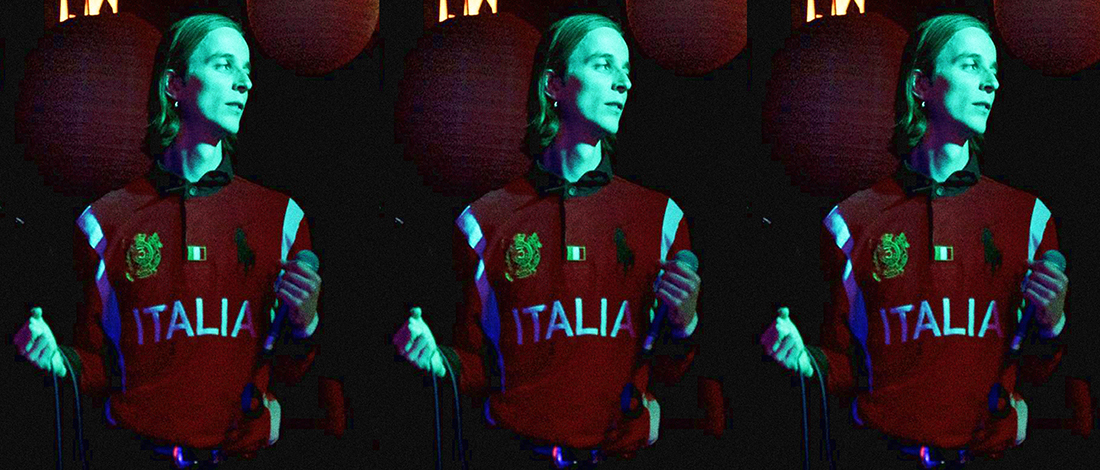
DT 500 MAG: – Bastian, give us a crack at defining yourself.
BASTIAN: –I would like it to be a mix of Dorian Grey and The Count Of Monte Cristo. I’m not afraid of getting old, and I’m not searching for revenge. Still, the elegance, power, and surroundings of pure beauty that these characters embody are something I strive for significantly.
DT 500 MAG: – And your upbringing?
BASTIAN: – None of my parents plays any instruments, and they don’t listen to music that much. I only remember I wanted to play the drums, and that’s how everything started. My first band was called “Fire Drums.”
DT 500 MAG: -You told us you grew up in a 500-year-old rectory. How was that experience?
BASTIAN: – It is a beautiful place, and I understood that very early. I remember listening to the church bells ringing every day very distinctly. Growing up like that enlightened me to understand history and be interested in mythology and religious stories.
DT 500 MAG: – You’re into old heroic tales like the Iliad. What’s your personal epic?
BASTIAN: – We are all trying to conquer the world somehow. I’m obsessed with the idea of a real hero. Heroic stories are all about courage, beauty, death, and even tragedy in one. And that is present from Achilles to Alexander the Great, Napoleon, or in sports, for example, Fausto Coppi.

DT 500 MAG: -Your mag, Killer View — who are you aiming to slay?
BASTIAN: – I wanted to create a printed magazine that was beautiful and diverse. The publication includes art, poems, historic articles, essays, and lyrics. I wanted to show people that printed publications last forever.
DT 500 MAG: – Grand Prix — what’s the deal?
BASTIAN: – My image is the world champion? The impregnable star who runs everything. But I also want to express the dark side of sound. There is a massive doubt in yourself that every person must have. You can wake up one day and feel unbeatable; the next day, you feel miserable. How do you rise? History shows that everyone is in doubt for themselves once in a while. But this corrosive doubt mixed with your ambition of being an emperor is what you create: something compelling.
“The music is a majestic, elegant march, but I still strive to make it shaking and vulnerable. It must sound important.”
DT 500 MAG: – Grand Prix for a stage name — why’s that?
BASTIAN: – First, I find it beautiful, and I like letters and articulation. The meaning of the name is ‘the great price,’ and to win the highest prize of all must be the goal for everyone, whatever people want to do with their lives. Then there is the reference to sport. I enjoy watching cycling; it is the closest you get to showing the self-dissolving effort required to write your name into history.
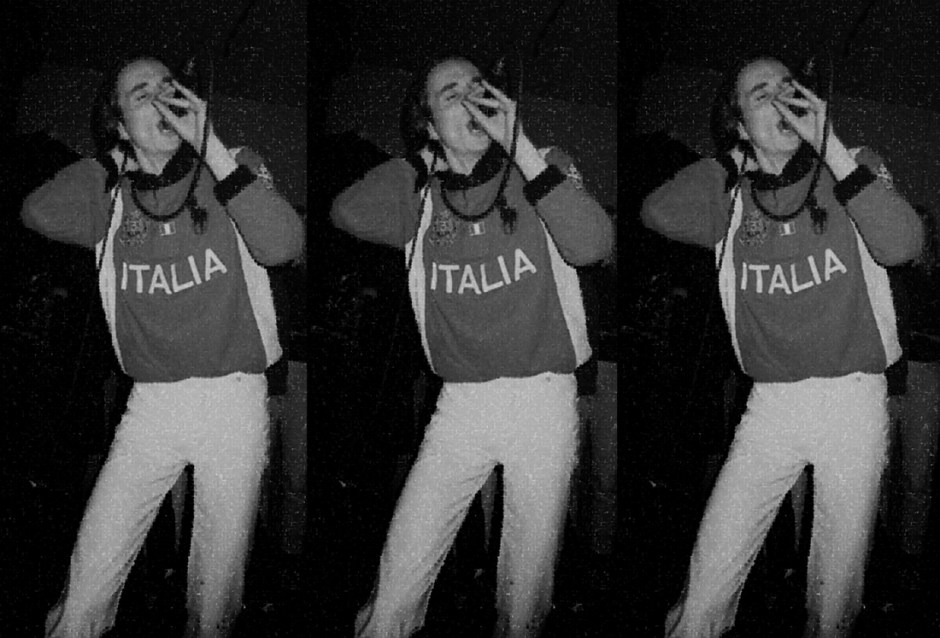
DT 500 MAG: – Secret Life, now Grand Prix solo — what’s the scoop?
BASTIAN: I collaborate closely with my friend Patrick Kociszewski. We created Secret Life together, where he sings. He helped and was a significant influence in shaping the universe I wanted with the Grand Prix. He also helped me improve my voice. I would describe my voice as an almost crooning deep voice from the bottom of my heart.
DT 500 MAG: – You live in Copenhagen; how does it influence your work?
BASTIAN: – I think the grey weather is the first thing I think of when I think about Copenhagen. The consistent tones of grey make you hungry for something colourful. I like to think that Copenhagen hasn’t changed – it looks the same as when Kierkegaard walked around in his yellow jacket. But honestly, I don’t find that much inspiration in Copenhagen.
DT 500 MAG: – What style of music are you making, guys?
BASTIAN: – As I noted earlier, I will name it Majestic March Music.
DT 500 MAG: – Bastian, what are you singing about?
BASTIAN: – My lyrics are about the conqueror, the world champion, whose style is glaring. What comes to his mind, and how he rises to conquer the dark obstructions that threaten to ruin life.
DT 500 MAG: – Tips for boosting the mind?
BASTIAN: Take a walk, read books, and have patience. Personally, I read about the Greek gods.
DT 500 MAG: -Gigs lined up?
BASTIAN: The next step is releasing my EP line. I’m also doing play shows. The next one will be on November 21st on vinyl.
#rapture!
#dt50015minoffame
https://w.soundcloud.com/player/?url=https%3A//api.soundcloud.com/tracks/215253356&auto_play=false&hide_related=false&show_comments=true&show_user=true&show_reposts=false&visual=true“>http://
Interview by Arthur Sopin
Photo by Joe Skilton
 #dt500mag