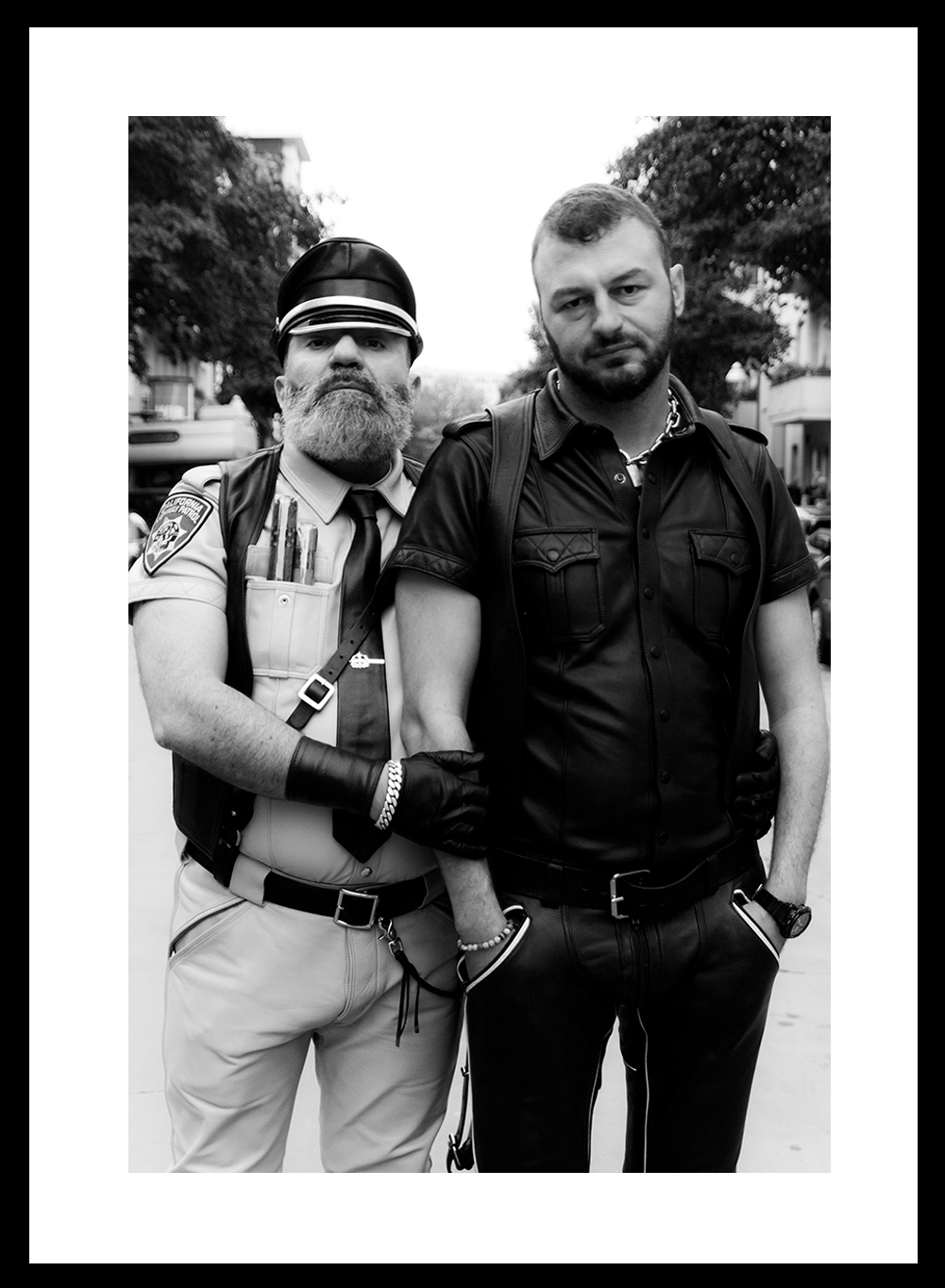

Berlin, famously, does not need your approval. It has survived reunification, gentrification, techno tourism, and an endless parade of people arriving to “find themselves” — usually within 48 hours and a very expensive club queue. It remains unimpressed.
BØSE BUBEN enters this environment not as explanation, but as interference.
This is documentary photography in a city that has long stopped believing in documentary innocence. Because let’s be honest: innocence is not a visual strategy anymore. Not here. Not now. The image is no longer a witness — it is a participant, sometimes a provocateur, occasionally just another body in the room trying not to be perceived too clearly.
And Berlin nightlife is precisely that room.
What unfolds is not “scene documentation” in the polite cultural sense. It is proximity without apology. Sweat, glare, and darkness are doing most of the editing. Bodies moving through sound as if categories were temporarily suspended — not abolished, just politely ignored.
There is a reason Berlin keeps attracting this kind of work. It is one of the few cities where contradiction is not a problem to be solved but a basic infrastructure. Queer life here is not curated for legibility. It is lived at volume. Sometimes beautiful, sometimes chaotic, occasionally ridiculous — often all three in the same five minutes.
If Nan Goldin gave us intimacy without filters, Berlin adds something less sentimental: intimacy without reassurance. There is no promise that you will be comfortable with what you see. That is not an oversight — it is the point.
Andreas Rød’s photographic gaze moves through this space with a kind of disciplined instability — not voyeuristic distance, but closeness that refuses to behave politely. He’s swift framing resists turning the material into moral theatre or sociological comfort. Together, they refuse the two great clichés of contemporary image-making: explanation and aesthetic smoothing.
Because the truth is, most documentary photography today is too polite. Too aware of its captions. Too careful not to disturb the viewer. BØSE BUBEN is not interested in your comfort, your clarity, or your takeaway.
It is interested in presence.
Presence as friction. Presence as risk. Presence as something that happens when people stop performing for documentation and start existing despite it.
In Berlin, that line is always thin. One moment you are looking at a portrait; the next you are inside it. The camera does not stand outside desire — it is already implicated in it. The image does not describe nightlife; it gets dragged through it.
This is what makes the work contemporary in the only way that matters: it refuses the fantasy that photography can still be neutral. In a culture saturated with images designed to be instantly understood, instantly shared, instantly forgotten, ambiguity becomes almost radical.
Or, to put it less politely: clarity is overrated, and often dishonest.
Berlin understands this instinctively. It always has. It is a city built on unfinished sentences, broken narratives, and clubs that open when most cities are already asleep in their own conclusions.
So BØSE BUBEN does not document Berlin nightlife as subject matter. It documents it as condition — unstable, erotic, slightly excessive, occasionally profound without meaning to be.
Nothing here asks to be resolved. Everything asks to be seen without being simplified.
And in a media culture obsessed with explanation, that refusal alone feels like a position.
Berlin, as ever, is not here to be understood.
It is here to continue.







Photographer Andreas Rød
Text Arthur Sopin
 #dt500mag