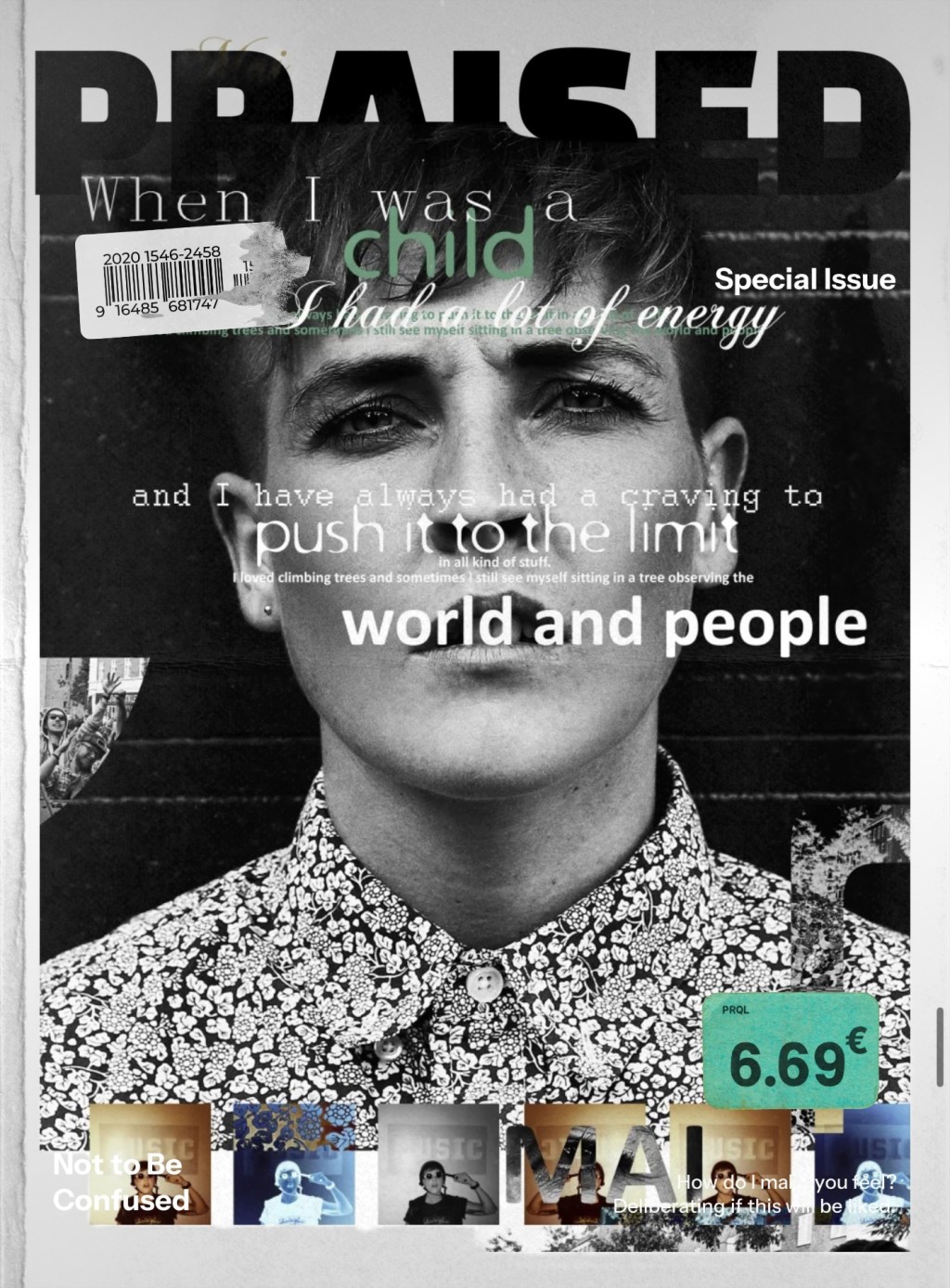

Copenhagen’s underground doesn’t believe in superstars. It creates survivors.
Every fashion capital has its uniform.
Paris has effortless chic.
Milan has calculated seduction.
London has theatrical chaos.
Copenhagen?
It has women who look as though they’ve just cycled through the rain, haven’t slept much, and somehow still possess better style than the rest of us.
Mai Schaarup belongs to that tribe.
Not because she’s trying.
Because in Denmark, trying too hard is perhaps the only genuine fashion crime.
MAI SCHARUUP!
She is less nightclub diva than Nordic protagonist: running half-marathons on a broken foot, producing electronic music alone until sunrise, disappearing into forests to clear her head before returning to Copenhagen’s industrial dance floors. It sounds suspiciously cinematic.
The irritating thing is, she actually lives it.
There is a uniquely Danish contradiction at work here.
The country consistently ranks among the happiest on Earth, yet produces artists fascinated by solitude, melancholy and beautifully restrained emotion. They don’t wear their feelings on their sleeves.

They bury them beneath immaculate tailoring, excellent coffee and remarkably efficient public transport.
Then they write extraordinary music.
Mai understands this instinctively.
Music, for her, isn’t performance.
It’s therapy with better speakers.
“Running and creating music feel the same. My mind becomes free.”
Simple.
Unpretentious.
Very Scandinavian.
Unlike the endless procession of DJs now building careers through TikTok choreography and carefully curated Ibiza sunsets, Mai remains stubbornly uninterested in becoming content.
She’d rather become better.
How refreshingly unfashionable.
The real protagonist here, however, isn’t Mai alone.
It’s Copenhagen.
Not the Instagram version of colourful harbour houses and cinnamon buns, but the city that begins after midnight. A place where electronic music receives public funding, where Culture Box has become something approaching civic infrastructure, and where creativity is treated less as entertainment than as a public necessity.
Imagine Westminster subsidising techno.
Exactly

The Meatpacking District remains satisfyingly rough around the edges. Christiania continues quietly ignoring convention. Nørrebro refuses to become predictable despite developers trying their hardest. Even the city’s celebrated minimalism feels less aesthetic than philosophy.
Nothing shouts.
Everything resonates.
Mai reflects that perfectly.
She possesses none of the exhausting self-mythologising that has become compulsory within creative industries. She openly admits she doesn’t yet consider herself a complete artist. She speaks about failure more comfortably than success.
That degree of honesty has become almost avant-garde.
Her story takes an unexpectedly darker turn.
Following a painful relationship breakdown, nightlife became an escape. Alcohol blurred into drugs. Club culture stopped feeling glamorous and started becoming a matter of survival.
She doesn’t romanticise any of it.
“I lost myself.”
Three words.
No melodrama required.
The recovery came not through reinvention but through discipline.
Learning production.
Working alone.
Building something that belonged entirely to her.
Very Danish, again.
There is no loud redemption arc.
Only quiet resilience.
Fashion loves to celebrate the “Scandi girl”—oversized tailoring, sensible trainers, expensive minimalism and enviable cheekbones. The aesthetic has become a billion-pound export.
Mai reminds us that Scandinavian cool was never really about clothes.
It was always about emotional economy.
Say less.
Mean more.
Even her activism avoids performance. Playing Copenhagen Pride and refugee benefit events isn’t branding; it’s simply presented as the obvious thing to do.
No hashtags.
No self-congratulation.
Just action.
How terribly old-fashioned.
By the interview’s close, Mai remains something increasingly rare.
Mysterious.
Not because she’s hiding anything.
Because she still believes that not every part of a life needs to become public property.
Social media, she suggests, polishes everything until reality disappears.
Perhaps that’s why Copenhagen continues producing artists who feel strangely authentic.
The city encourages living first.
Posting later.
If at all.
In an age addicted to spectacle, that may be the most radical performance of all.
#RAPTURE!
Interview by Arthur Sopin
Photographer: Polina Vinogradova
Graphic Design by BIOTOM
 #dt500mag