

DOWNTOWN 500 ZINE EXHIBITS
CACHO FALCON
Cacho Falcon doesn’t really arrive in New York so much as survive it, which—depending on your angle—is the same thing as becoming part of its mythology. Somewhere between Williamsburg light therapy and the city’s eternal promise of reinvention, he turned denim into confession, fabric into therapy, and personal narrative into something suspiciously close to a business model. Not intentionally, of course. New York rarely rewards intention.
It began in 2003 with what sounds, in retrospect, like an art-school fever dream: “Therapeutic Denim.” People brought him their jeans and, along with them, the mildly chaotic archive of their lives. Break-ups, migrations, identity crises, small triumphs—the usual inventory of being alive in the early 2000s. Falcon listened, nodded, and painted it back onto denim as if the fabric had been waiting its entire life to finally say something useful.
Naturally, fashion noticed. Fashion always does, eventually, like a very expensive animal smelling smoke. Perry Ellis pulled him toward Fashion Week in 2004. Elle placed him neatly on its pages, as if he had been misfiled and finally corrected. Carrie Underwood wore his jeans on the American Idol finals in ’05, which is the kind of sentence that explains nothing and everything at the same time.
Meanwhile, Falcon lived in Brooklyn the way most artists are legally required to: slightly underheated apartments, shared spaces, side jobs that don’t quite justify the rent, and the ongoing belief that meaning would eventually catch up. He worked, he drew, he absorbed other people’s lives like unpaid research. Then in 2006, he did the most dangerous thing possible in New York—he committed to his own seriousness and became a full-time artist.
What followed was less transformation than escalation. Painting replaced denim, then absorbed it, then moved beyond it entirely. He stopped decorating surfaces and started excavating them. Childhood, addiction, fractured relationships—the usual modern trilogy—arrived on canvas not as themes but as receipts. The work didn’t ask for interpretation so much as participation, which is always a slightly uncomfortable invitation in this city.
And then came the strangers. Always the strangers. The ones who, for reasons best left unexamined, decide you are a safe place to leave things. They brought stories. Falcon, apparently, accepted them. The result was a body of work that behaved like a shared secret nobody had agreed to keep quiet.
At some point in this unfolding system, Beyoncé and Tina Knowles entered the picture, because of course they did. There was a collaboration. There was a Michelle Obama “Let’s Move” T-shirt. There is always, eventually, a T-shirt.
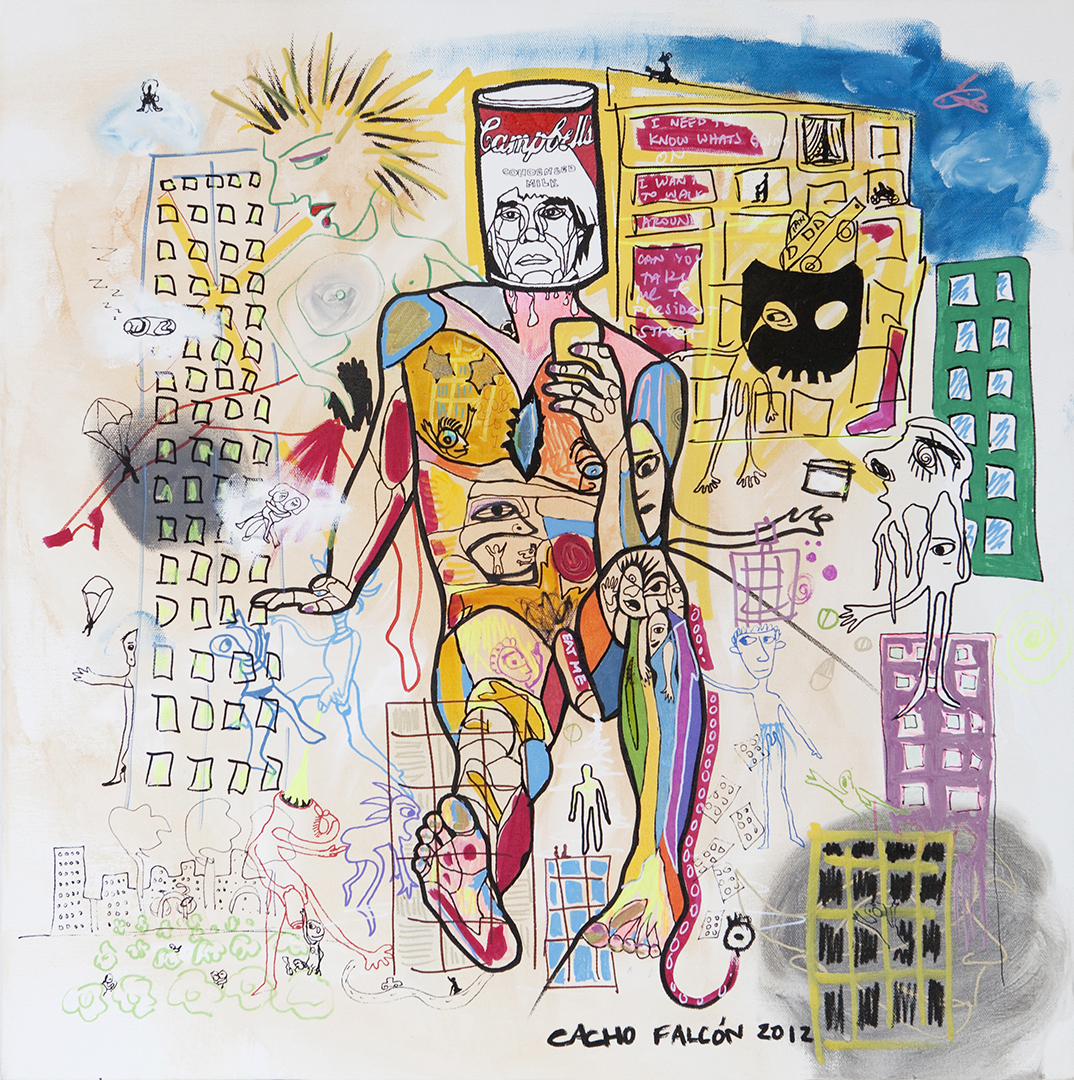
Today Falcon works with body paint, which is either a logical next step or a complete breakdown of all previous steps, depending on how generous you feel. The premise is simple enough to sound almost naïve: people tell him their stories, and he paints them onto their bodies. Then photographs them. Then washes it away. Intimacy, documentation, erasure—New York’s favourite emotional sequence.
In Williamsburg, he lives in a space he describes as “heaven,” which in Brooklyn typically translates to good light, controlled isolation, and the disciplined avoidance of leaving the apartment unless absolutely necessary. He installs his environment weekly, like a temporary exhibition of his own psychology. Most people rearrange furniture. Falcon rearranges states of being.
He does not plan, which in New York is either a philosophy or a liability, depending on your tax bracket. He prefers flow, opportunity, reaction—words that sound suspiciously like surrender until you realise they’re just another way of staying ahead of collapse.
The ambition, when reduced to its most honest form, is disarmingly un-New York: to keep going. And, if possible, to never fly coach again.
Which, in this city, might qualify as the same dream.
DT 500 ZINE: – Having long called Williamsburg, Brooklyn, home, Cacho Falcon, could you share with us the roots of your journey?
CHACO: – I’m originally from Paraguay.
DT 500 ZINE: – You seem like a colourful persona; tell us more about you?
CACHO: – I’m more of a loner. Few friends. Do love people.
” Meeting new people and learning more about them is significant to me, making it easier for people to open up to me.
CACHO: – I discovered this at a very young age.
” I would draw things I couldn’t talk about with anyone.”
DT 500 ZINE: – Why painting?
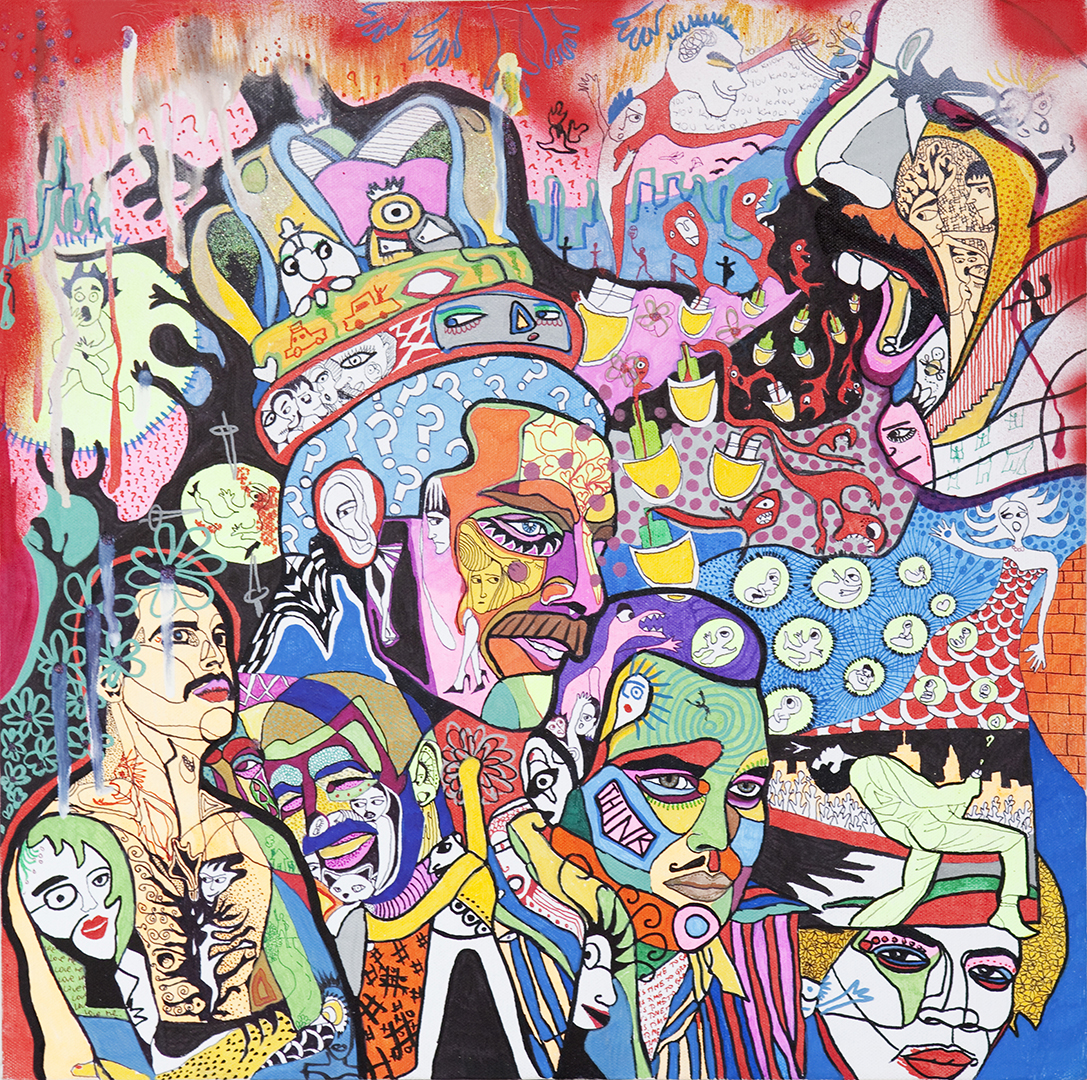
CACHO: – Art is essential to me because it is my confidence.
” When I do art, I’m recreating myself, and it’s like looking into the mirror of my soul. It’s terrifying sometimes, but at least I’m having a conversation and acknowledging what’s happening at the time.”
CACHO: – My inspiration comes from situations I put myself in and the people I meet.
DT 500 ZINE: – Could you share insights into your most recent artistic endeavour? What inspired this particular work, and what themes or messages does it aim to convey?
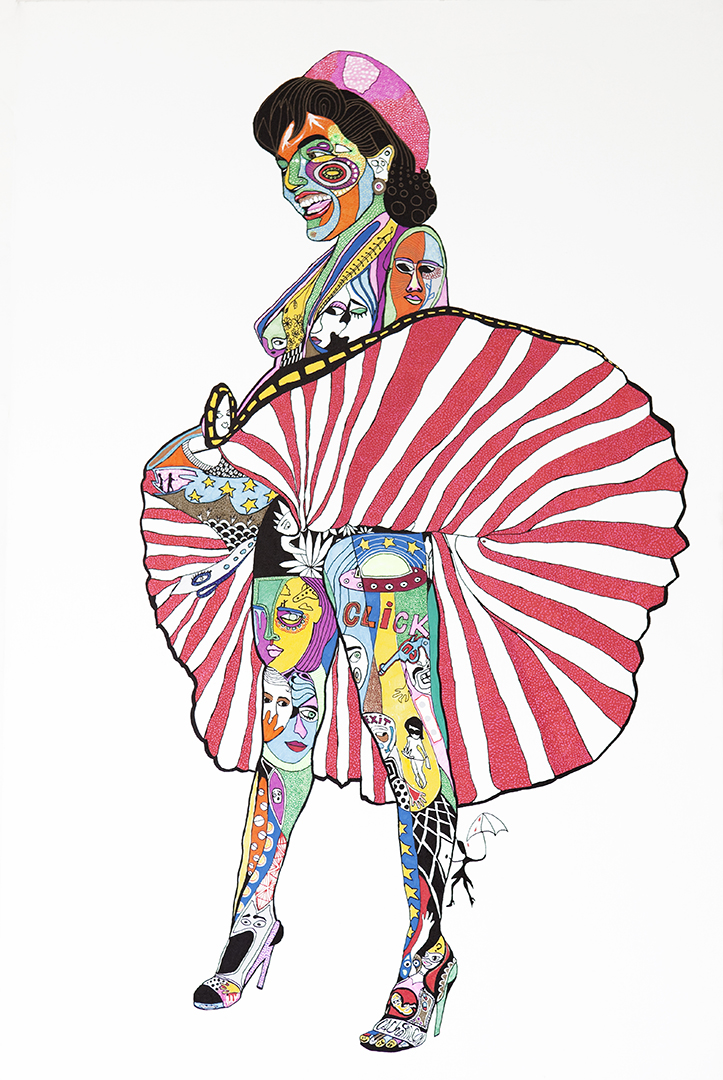
CACHO: – My latest work is body paint.
” Blending people’s stories with mine and finding the similarities. I push the boundaries to a vulnerable place; I like to do that with my subject.”
DT 500 ZINE: – Could you elaborate on the motivations or inspirations behind your latest work? What drives you to explore these particular themes or ideas at this point in your artistic journey?
CACHO: –
“It is good for us to push and be out of our comfort zone.”
CACHO: – This year, I’m having a show back home in Paraguay and working on a new, much softer, more straightforward concept. But we will see, and I’m just experimenting.
DT 500 ZINE: – Could you narrate the story behind your body of work? What themes, narratives, or personal experiences have shaped your artistic journey thus far?
CACHO: – The body art is an exploration of yourself. We talk about your story; I paint that on your naked body.
” After covering your body with your story, I take pictures of you to clean you in the shower later. It’s almost like having an affair, where everything we do or talk about goes down the drain. Then, usually, I’ll dress you, and you go back to your everyday life.”
DT 500 ZINE: – What are you striving to achieve through your art?
Cacho: – I want to be able to keep on doing what I do. Oh, and never fly coach again. That sums it up.
DT 500 ZINE: – Could you describe the place where you currently reside?
CACHO: – My Neighborhood is Williamsburg, BK. My home is in heaven. I have a great light, which gives me the feeling I’m outside. I like that because I’m a person who doesn’t leave this place so much.
” I do an installation at home every week, so I create the environment I want to leave for that week. I create my own little world according to my mood, which is where I create.”
DT 500 ZINE: – Could you share what ongoing projects or plans you’re currently involved in?
CACHO: – I never plan. I go with the flow. If I get presented with opportunities I like to be part of, I do it; otherwise, I just stay home and create. It’s the way to do it, but that’s the only way I know how to work.
#RAPTURE!
Interviewed by © Arthur Sopin and Andreas Rod
 #dt500mag