DT 500 ZINE Features Fredéric Chaubin on His Unconventional Path and Visionary Approach to Photography
London, UK – MOn 24, Jun 2021
In a dazzling display of charisma and intellect, Fredéric Chaubin, the visionary lensman behind some of the world’s most captivating architectural photographs, took centre stage on DT 500 ZINE. From his beginnings which were more law school “flop” than “top,” Chaubin’s journey has been anything but conventional.
When probed about his background, Chaubin quipped with a smirk, “I unsuccessfully studied law for ages until I wondered if I’d missed the memo on brainpower. Law just wasn’t my scene, darling.” His candid reflection laid bare the detours that ultimately led him to an editorial role at a magazine, where he discovered the perfect canvas to blend his words with his lens, crafting a unique visual narrative steeped in architectural intrigue.
Raised on whimsical memories like a spectral encounter with a sea behemoth off Malaysia’s shores, Chaubin’s childhood fascination with the extraordinary has been a steadfast muse in his artistic endeavours. “When you’re wee and witness something that leaves adults scratching their heads, you just have to bottle up the magic,” he mused, reflecting on how youthful wonder continues to shape his photographic perspective.
Discussing his creative process, Chaubin posited, “Photography for me is capturing the vibe of a place or a moment. It’s about framing emotions rather than just pixels.” His penchant for pushing boundaries and uncovering hidden narratives in architectural marvels resonates deeply in his work, where each photograph tells a story that transcends mere visual appeal.
Known for his audacious escapades in pursuit of the perfect shot, Chaubin recounted a bone-chilling expedition to Leningrad’s mist-draped harbour terminal, where sub-zero temperatures and a stalled camera lens nearly froze his artistic ambitions. “Thankfully, a generous Russian officer and a bottle of liquid courage got me out of that icy pickle,” he chuckled, reminiscing on the unpredictable thrills of his craft.
DT 500 ZINE: – Fred, tell us about the patchwork of your past, the streets and shadows that shaped you.
FREDERIC: – I unsuccessfully studied law for years until I started asking myself if I was mentally disabled. Law was not my thing. So I turned my back to it. Later on, by chance, I managed the editorial part of a magazine. I had always dreamed of producing a personal vision, combining my pictures and words into a particular work. There, I could achieve this goal through specific features related to architecture.
DT 500 ZINE:– Fred, paint us a picture of your upbringing—those formative years spent navigating the labyrinthine streets of life, where each cobblestone held a story, and every corner whispered secrets of your growth and evolution.
FREDERIC: – This is one of the earliest memories of my childhood. Maybe it’s just a figment of my imagination:
“I am 4 or 5 years old. On a boat sailing around Port Dickson in Malaysia, I unexpectedly caught a glimpse of the huge caudal fin of a fish, maybe some sort of whale, standing above the surface before diving into the deep. Then the sea is calm again. No one has seen it except me.”
FREDERIC: – The grown-ups don’t really care. So I have to keep it for myself. I’m left alone with the frustration of not sharing this fabulous vision… This is why I now keep track of what seems extraordinary to me.
DT 500 ZINE: -How often do you find yourself drifting back into the mosaic of your childhood memories, Fred? Do they come to you like waves lapping at the shore, or do they linger, like echoes in the quiet corners of your mind?
FREDERIC: – According to Waldo Emerson:
“ We spend most of our life building our own house until the day we get locked inside. We start framing the world, and then the world frames us.”
“But children still ignore doors and fences. They explore. They bypass reality. In some way, they are superheroes.Childhood is a time of superheroes confronting a world of giants.This state of mind, the ability that children have to marvel at things, is what you need to stick to.If not, Art turns into a social commentary or commonplace.”
DT 500 ZINE: – Fred, could you take us back to that defining moment when your passion for photography first took root? How did it all begin for you, weaving its way into the fabric of your life, shaping your perspective through each captured image?
FREDERIC: – It starts with an emotion brought by seeing an object or a subject. My aim is usually to manage to frame this sentiment. It’s difficult to say if you catch or build the result.
DT 500 ZINE: – Do you remember your first picture framed?
FREDERIC: – I was probably around 8 years old. I took some pictures of a bullfight. When the film of my tiny Kodak Instamatic camera was processed, I discovered with surprise that the characters were petite-sized; they seemed lost in print.They didn’t look so far when I photographed them. For the first time, I was facing the effect of lens distortion.
DT 500 ZINE: – Fred, when it comes to selecting the perfect subject to photograph, what’s your approach?
FREDERIC: – It’s a combination of the building’s visual strength and the dramatic potential of its background. My favourite set is a Construction recommended to me by the Snøhetta architects.It’s a summer house located on Norway’s southern coast, a cabin built in the sixties by Bengt Espen Knutsen for his own purpose.At a distance, it looks like a couple of matchboxes left on the ground, hidden among the rocks. It’s some kind of modest perfection.
Kamo Gyanjyan
DT 500 ZINE: – Fred, amidst your quest for modest perfection, what elements or influences serve as pillars supporting your creative journey? Is there a particular source of inspiration, a routine, or perhaps a muse that consistently fuels your artistic process?
FREDERIC: –
“I try to get closer to the edge, into a disorienting state of mind.”
DT 500 ZINE: – Fred, could you delve into the genesis of this idea—was it sparked by a moment of inspiration, shaped over time through experimentation, or perhaps influenced by personal experiences that moulded it into fruition?
FREDERIC: – Just by chance. Serendipity! I just noticed these buildings that no one had documented earlier. I only had an acute eye and grabbed the opportunity. Then, the rest went on like a treasure hunt.
FREDERIC CHAUBIN
DT 500 ZINE: – would you describe yourself as an adventurer?
FREDERIC: – I wanted to feature a picture of the Leningrad harbour terminal lost in the mist in a way that would recall Caspar David Friedrich’s romanticism in the book. To do so, I had to risk myself in the frozen waters of the Gulf of Finland. On that winter day, the temperature was minus 28 degrees Celsius. After two or three shots, the lens was blinded with condensation, and the shutter release went blocked. I couldn’t feel my fingers.
” The Russian guy at my side suggested we’d ask the Saint Petersburg Coast Guards for help. After a thirty-minute walk, we arrived half-frozen at their headquarters. The local officer invited us in for a drink. It took us an entire bottle of whiskey and an hour of drinking binge before he drove us back on the ice with isothermal clothes and his over-craft. Thank God, the few pictures I had taken previously turned out to be good because the last ones were totally out of focus. “
DT 500 ZINE: – Fred, what draws you to the allure of Soviet architecture? Is it the imposing grandeur of monumental structures, each bearing the weight of history and ideology in their concrete facades? Or perhaps it’s the stark contrast between functionalism and the human stories hidden within the austere lines and vast public spaces?
FREDERIC: – the Soviet Union tells the story of a utopia that turned into a dystopia, a fascinating disaster.This is what makes it aesthetically so attractive to people.
DT 500 ZINE: – Le Corbusier’s vision of demolishing Paris’s old buildings to replace them with modern high-rise blocks sparked intense debate and continues to provoke reflection on urban planning and architectural heritage. What are your thoughts on this ambitious proposal, Fred? Do you believe in the potential benefits of modernization, or do you see value in preserving the historical fabric and charm of cities like Paris?
FREDERIC: Le Corbusier is a controversial figure who is blamed or celebrated according to the day’s trend.He is the guru of Modernism worshipers. I’m not one of them. I don’t believe in the Messiah. Modernism was the primary dogma of the last century, a mindset that belonged to the West and Soviet Ideology. This rigid system gave birth to extensive forests of inhuman beehives. Now, we have to cope with the outcome. I don’t feel any nostalgia. And Thank God Paris has been preserved. I’m reluctant about any system where individuality gets drowned in dubious collective values.
Kamo Gyanjyan
DT 500 ZINE:- What principles guide your theories on architectural ensembles, Fred? Do you believe in the harmony of complementary structures, each contributing to a unified whole that enhances the urban landscape? Or do you find intrigue in the juxtaposition of contrasting styles, creating a dialogue between old and new, tradition and innovation? Share with us your insights into how architectural ensembles shape our built environment and cultural identity.
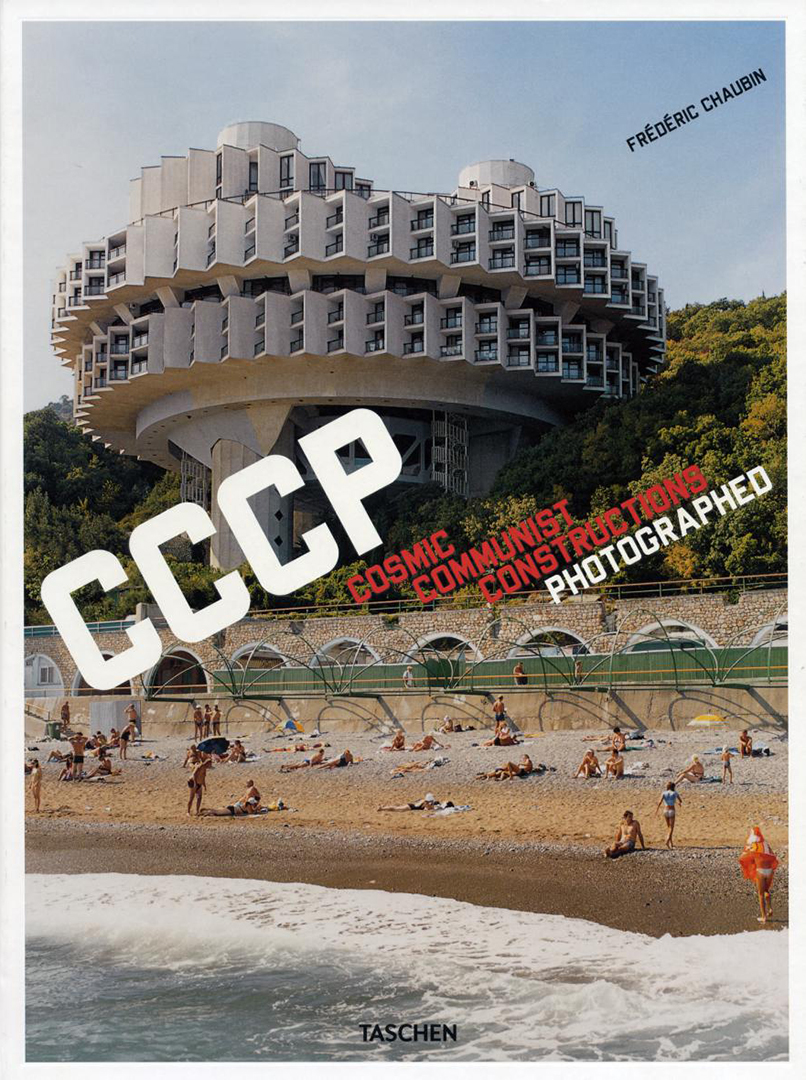
FREDERIC: – I believe that shapes speak.The most oversized and dramatic buildings erected in the USSR had an apparent symbolic meaning.One of their aims was to express the transcendence of power, the strength of the Soviet Empire.To some extent, they represented some kind of“monumental theology”. They were the shrines of the Marxist profane religion. Later, when everything started falling apart in the late seventies and eighties, some local architects began trespassing against the rules, trying to shape their way out of this Orwellian world. There was a colossal craving for fulfilment. Hopelessness had been the mood until then.
” An artist of that time used to express this state of mind by painting beheaded crowds crossing urban locations, streets, factories, railway stations. But suddenly, you didn’t have to break the rules anymore. They were crumbling. These architects had to invent new shapes. They hadn’t been taught how to do so. This is how some DIY metaphysics took place, illustrated by the weirdest architecture of the period.”
DT 500 ZINE: – when contemplating the essence of architecture, what do you believe is its overarching purpose? Is it to provide functional spaces for human activity, to inspire through aesthetic beauty, or perhaps to shape and define cultural identities and aspirations? How do you perceive architecture’s role in both reflecting and influencing society and what ideals or principles do you prioritize in your own architectural endeavours?
FREDERIC: – Literally to bring shelter to people. But in a more understated way, it frames culture and ideology.
DT 500 ZINE: – do you draw or paint sometimes?
FREDERIC: – A long time ago, I drew storyboards. Sometimes, I grab a pencil. But discovering other people’s work is more thrilling. This is how I feed my brain. The favourite is always the latest on the list. Last summer, it was Romualdas Silinskas, a leading architect of the period I’m focused on, and I discovered his erotic drawings. It’s Kamo Gyanjyan, a “cosmic” Armenian artist who also used to work in Soviet times. I’m collecting their works.
DT 500 ZINE: – Paris is renowned for its rich cultural tapestry and architectural splendor. How has this iconic city influenced your creative vision and personal growth? Has its vibrant history, artistic ambiance, or the timeless elegance of its urban design left a lasting impression on your work and aspirations?
FREDERIC: – French people love socialite practices. I’m not really into it.
” I move more or less every three years from one district to another. It keeps me from getting fossilised.”
DT 500 ZINE: – Fred, as you navigate your current creative landscape, could you provide us with a glimpse into the projects that currently occupy your time and passion? Whether they involve groundbreaking designs, innovative collaborations, or the revitalization of historic spaces, we’re eager to hear about the endeavors shaping your architectural journey.
FREDERIC: More architecture, nude art photography, oranything that moves me.
When asked about his views on architecture and its purpose, Chaubin waxed poetic, “Architecture isn’t just about bricks and mortar; it’s the frame that captures the zeitgeist of a culture.” His disdain for conformity and admiration for the avant-garde shine through in his ongoing projects, which span from the architectural grandeur of Soviet relics to the delicate artistry of nude photography.
Fredéric Chaubin’s interview on DT 500 ZINE wasn’t just a showcase of his artistic prowess but a testament to his fearless spirit and unwavering commitment to storytelling through the lens. As he continues to defy convention and capture the essence of architectural marvels, Chaubin remains a luminary in the world of contemporary photography.
About Fredéric Chaubin: Fredéric Chaubin is a trailblazing photographer celebrated for his evocative portrayal of architectural landscapes. With a career spanning unconventional beginnings to global acclaim, Chaubin’s work challenges perceptions and inspires awe with its narrative depth and artistic brilliance.



 #dt500mag