
Clayton Patterson, the indomitable chronicler of New York City’s Lower East Side (LES), sits down with DT500 Zine to recount his remarkable journey through the cultural melting pot that defined downtown Manhattan in the late 20th century.
Arriving in NYC in 1979, Patterson and his wife Elsa found themselves immersed in the eclectic milieu of the LES. “We lived in Brooklyn briefly before settling at 325 Broome Street,” Patterson recalls, “a tenement building buzzing with artistic energy. It was when Keith Haring, among others, made the area a hub of creative ferment.”
As a printer at a fine art shop, Patterson’s early years were marked by a deep dive into the art world. He honed his craft alongside luminaries while mastering techniques like photogravure and steel-facing. “I soon found myself exhibiting in SoHo,” he reflects, “but the allure of the LES drew me away from the mainstream art scene.”
When Patterson transitioned to the LES in 1983, he encountered a vibrant and volatile neighbourhood. “Our first night,” he recalls vividly, “we witnessed a shooting from our window. It was a community of extremes: from drug deals on street corners to avant-garde art studios and grassroots activism.”
Patterson’s role as a documentarian burgeoned over the years, amassing over a hundred thousand photographs, countless hours of video footage, and extensive audio interviews. “It’s living history,” Patterson passionately explains. The LES was a tapestry of multiculturalism and counterculture, a convergence of Jewish, Asian, and Hispanic communities alongside artists, activists, and eccentrics.”
CLAYTON PATTERSON
DT500ZINE: – What were your reflections upon experiencing the Lower East Side of New York City upon your initial arrival? Could you share with us your thoughts and observations of that vibrant locale at that particular moment in time?
CLAYTON: My wife Elsa and I went to N.Y.C. in 1979. We lived in Brooklyn for three weeks and moved to 325 Broome Street. A tenement building with four floors with artists. The most well-known artist was Keith Haring– he lived above us. We worked as printers in a fine art print shop, printing renowned artists’ works and learning to do photogravures, steel-facing, etc.
” Then I started to show it in ultra-hip SoHo, one-person shows, and so on. Hated it all. “
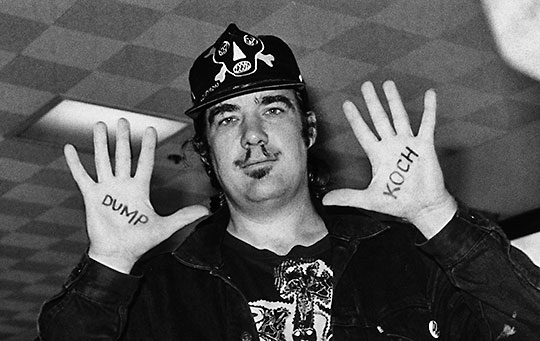
DT 500 MAG: –What was the atmosphere and milieu of the Lower East Side like during the 1980s? Could you paint a vivid picture of the cultural landscape, the social dynamics, and the artistic vibrancy that characterized this dynamic neighbourhood during that era?
CLAYTON: – I moved to the Lower East Side in 1983. On our first night, looking out the window, we saw someone getting shot and killed. We had the clock drug dealings out front. But we loved the community, and I spent years documenting it, making art, and being involved in different kinds of community activism.
Over the years, Mr Patterson has stored a massive archive that he estimates comprises hundreds of thousands of photographs, some 2,500 hours of videos, 300 audiotaped interviews, etc…
“It’s empirical history, immediate history,”
– Clayton explained.
“I go where my nose leads me. It’s a wealth of material, but it’s one guy’s view. The history of the Lower East Side is dense, multicultural, and diverse. There are multiple layers of the community. You had Jews, Asians, Puerto Ricans, Dominicans, avant-garde filmmakers, tattoo parlours, gay clubs, and the art scene. It takes documenting all these different circles to get how they connected.”
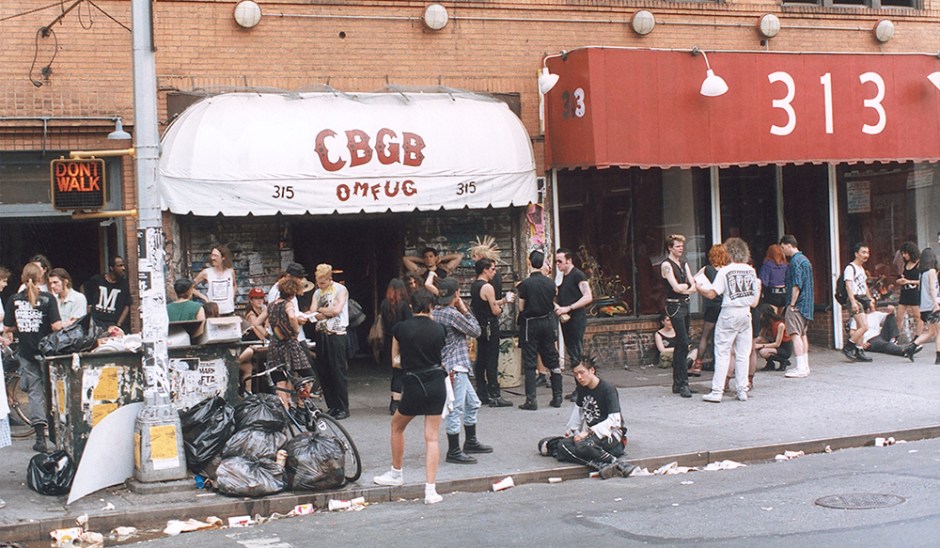
DT500ZINE: – Having ownership of the chronicles detailing the Downtown neighbourhood, is there a particular work that stands out to you as the foremost piece in capturing its essence?
CLAYTON: Court cases officially grant the right that the video belongs to me, the artist. Collages, Black and white Designs, sculpture, and art that is still not understood… The archive.. so much is always under the radar… The rebellion aspect- so the 100’s of arrests… What was leading to the reorganisation of the NYPD… I have many rare books… Clayton’s Caps… Handheld video footage… The Acker Awards… Masterpieces of L.E.S. original tattoo and its legalisation story … The front door and window… MNN TV Shows… there is no top…
“At that time, recognised professionals used high-end, expensive equipment. Professional cameras usually had a lot of extra baggage: a sound and light person, many heavy batteries, a large recording device, and a heavy, metal body shoulder carried a camera. My camera has a light made of plastic, is good in low light, has a built-in mic, used 2-hour tapes, and was an available consumer piece of equipment! It was the first time such a camera was used in this way. “
-Clayton Patterson
Clayton also played a significant role in the legalization of tattooing in NYC. During the late 80s and early 90s, a new wave of talented tattoo artists emerged from the underground Tattoo Society of New York, including names like Sean Vazquez, Michelle Myles, Paul Booth, Anil Gupta, and Wes Wood. Clayton emphasizes the transformative influence of this period:
“The Lower East Side was a crucible for creativity. Artists and intellectuals were drawn here because they could afford to live and create here. When Lou Reed moved here from Brooklyn in the ’60s, he rented an apartment on Ludlow Street for $38 a month. Now it’d be $3,000. I don’t think there’ll be any more Lou Reeds on Ludlow Street. All of the geniuses who were here because of the cheap rents are gone.”
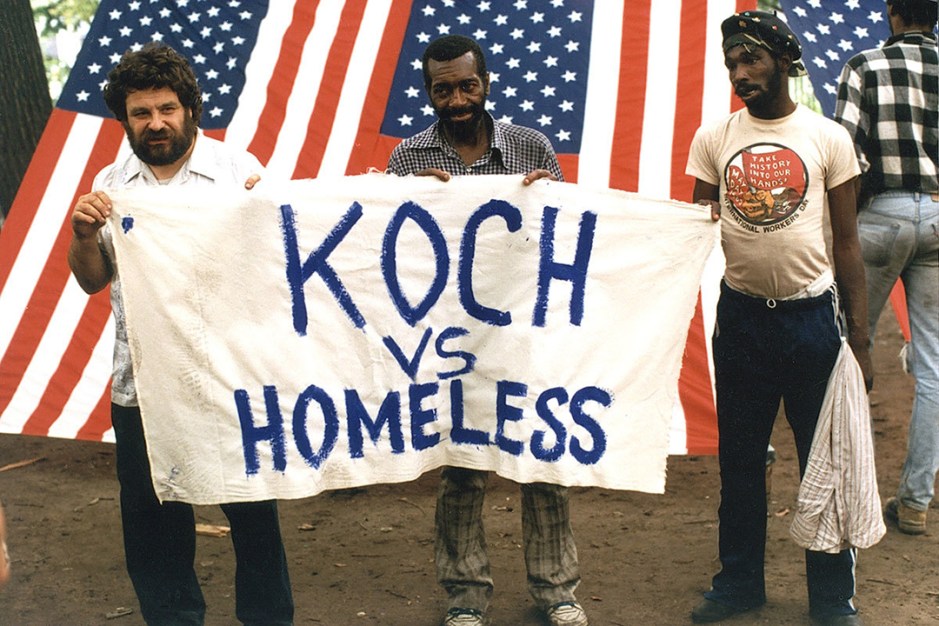
In uncovering more about Clayton Patterson, it’s essential to recognize his active role in the NO!ART movement. Emerging in 1959 as a radical avant-garde response to New York’s consumerist society, NO!ART was spearheaded by Boris Lurie, Sam Goodman, and Stanley Fisher. They vehemently opposed mainstream trends like Abstract Expressionism and Pop Art, opting instead to provoke with exhibitions at the March Gallery NYC.
Their shows—such as the Doom Show and the Vulgar Show—were notorious for their confrontational titles and themes. One particularly daring display, the 1964 No Sculptures/Shit Show, featured works resembling piles of excrement, while the Holocaust and critiques of societal issues were recurrent motifs. The artists unabashedly referred to their provocative creations as “Jew Art,” challenging conventions and sparking crucial discourse in the art world.
CLAYTON:- After The 1988 Police Riot video case- I was held in contempt of court because the NYPD wanted to get my original videotape, but I refused to hand it over. I fired the lawyer the city gave me and went pro-se. I tried to speak for myself. Eventually, I went to the State Supreme Court and was handed a repeating 90-day sentence until I handed over the tape.
DT 500 MAG: – What stance did you adopt, and what goals did you set out to achieve through your actions and endeavours?
CLAYTON: – My position was that I am an artist, the tape is a part of my art, and my art belongs to me. I was sent to the Bronx House of Detention. I was under a system called Central Monitoring. I must have a ranking officer escort me everywhere. Larry Davis was the only other prisoner in this system at the time. He had shot 6 cops. I went on a hunger strike. I got Lynn Stewart, William Kunstler, and Ron Kuby as my lawyers. I won. It was after this that I met Boris Lurie. We had different politics but a similar radical viewpoint relating to art.
DT 500 MAG: – What was your case?
CLAYTON: – Some of my court papers – One case was a federal one… dealing with an arrest, not mine, over a search at The Federal Building. Did one example with a college on the front. The government considered it a threat to the US Government. The judge agreed. Marshalls were sweet to arrest my friend at 4:30 in the AM, and back in court, I was told no more work on court papers. I handed in the next one, saying you are wrong. Much of the imagery in this was from Boris’s NO!ART images. Boris Lurie 1998 made me, as seen on the website, the head of NO!ART. West and Dietmar was the head of NO!ART East (Berlin). Boris and I argued about everything. But I loved Boris, and Boris loved me.
Clayton explained in one of his interviews :
“Eventually, I won my point, which was: – “I am an artist, and that tape is one of my artworks, and it belongs to me.” Yes, they can have a copy. I had a point of view and a reason to fight. I said on the Oprah Winfrey Show: “Little brother watching Big Brother.” That was a big statement, and millions of people saw that. It meant that anyone with a camera (a powerful weapon used to protect one’s democratic rights) could hold the authorities and the police accountable for their actions on the street! That was the beginning of a whole new digital age. “
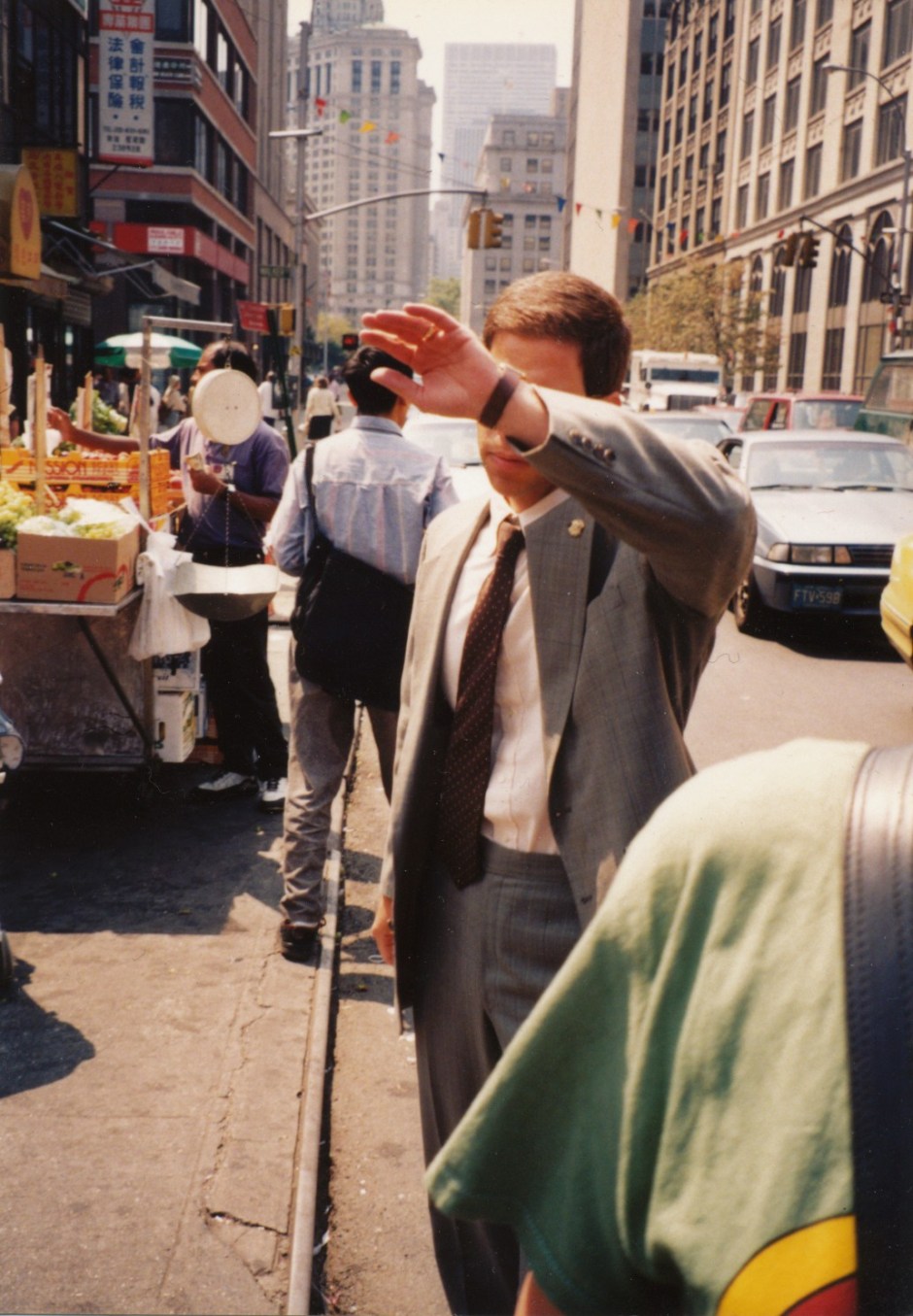
“NO! ART reflects the mixture of crap and crime with which the mass media floods the mind of our time. It is Pop with venom added.”
DT500 ZINE: – What fundamental principles and beliefs formed the core of NO!ART’s philosophy, guiding its artists and defining its provocative stance against prevailing artistic trends and societal norms?
CLAYTON:- I believe the agenda is still current. If I am still existing. And beyond that, I am not sure. There is no specific set of rules for the shows I pick. I just came across what I am going to show. Far and few between.
DT 500 ZINE: -Some activists were involved in NO!ART. What was your role in it?
CLAYTON: – This is a complicated question for me. I am not sure. After Boris died, I was engaged in many conflicts with The Group BLAF, who took it over. I felt they had deviated from what Boris wanted, and I undertook to get it straight. Many long aggressive engagements.
DT 500 MAG: – Do you remember your first NO!ART shows?
CLAYTON: – Some artists I have shown: Boris Lurie– I gave the first NO!ART show in 25 years in NYC. Boris, now, finally, is being recognised as one of the most radical artists to deal with the subject of the Holocaust, Dietmar Kirves, head of NO!ART East, I was ahead of NO!ART West, Aronovici. There was graffiti: Dash Snow, Joey SEMZ (also music), and others in The IRAK graffiti crew- LA2 of Keith Haring fame- to illustrate how he got robbed by the sizeable corporate art world machine- Genesis Porridge – Baba Raul Canizares (written numerous books- ) – Mickey “The Pope Of Dope” Cezar – Jose “Cochise” Quiles president of Satan Sinner’s Nomads ( book- ” Street Gangs of the Lower East Side” ). Art Party Pravda with artists like Konstantin K Kuzminsky (The Russian Anarchist who published “The Blue Lagoon Anthology of Modern Russian Poetry”), Oleg Pinchevsky, Alex Shnuroff, Alex Zakharoff and so on.
DT 500 MAG: – Anybody from the tattoo crew?
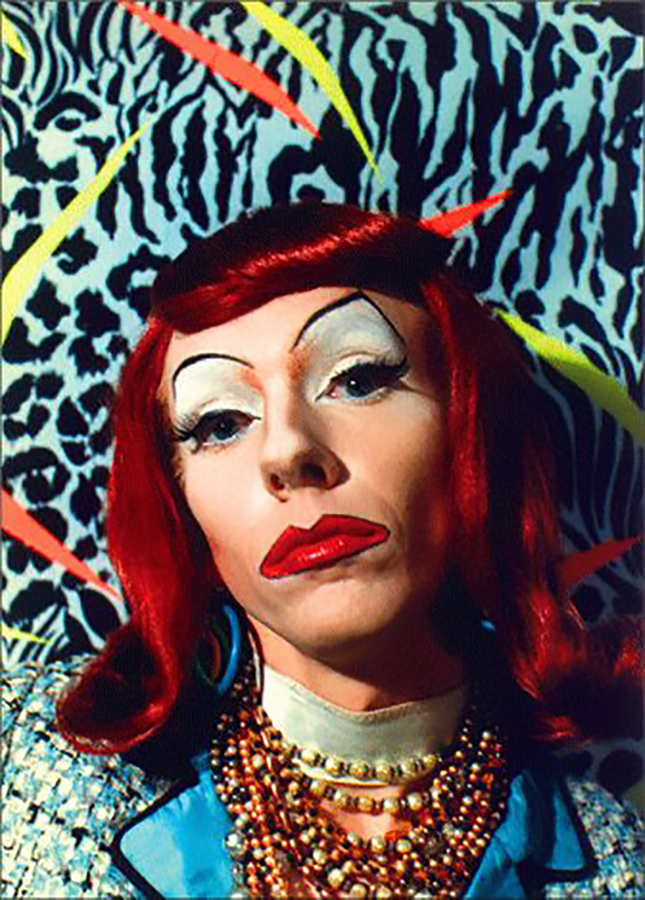
CLAYTON: – Yes, tattoo: Thom Paul DeVita, Spider Webb, Charles Gatewood, etc. I do remember Candy Darling’s drawings and diaries. Robert Lederman Giuliani shows Taylor Mead, Peter Missing, Merle Hazard (Peter Missing Show Water Wars was written about in New York Times by Colin Moynihan Heather MacDonald and took real exception to the fact that the NYT would write a cheerful piece on Peter Missing. Her claim was Peter’s symbol was such an anti-gentrification symbol. So many anarchists used it to represent anti-gentrification during the years of turmoil on the Lower East Side.
DT 500 MAG: – What about Heather MacDonald?
CLAYTON: – She wrote this article for The Manhattan Journal, in which she was an editor- a part of The Manhattan Institute was formed by William Casey when he retired from being the head of the CIA. Her article also appeared in The New York Sun. A short-lived right-wing paper. The only show I had that the CIA was engaged in. Did the New York Police Department try to set me up with Rakowitz (labelled by the press as the Monster of Tomkins Square Cannibal case)? And so on.

DT 500 ZINE: –Let’s explore the concept behind your Gallery & Outlaw Art Museum more deeply. How did you envision its role within the art community, and what specific themes or types of art do you aim to showcase and promote through its exhibitions and programs?
CLAYTON: – The basic idea behind the gallery was dealing with art outside the mainstream. Often, art deals with issues related to the law. Did not have to be criminal. For example, art that had court cases attached to it – I had some court cases related to my work – mostly video or broke the law. For instance, tattooing has been illegal in NYC since 1961; I showed work related to tattooing, graffiti art or conceptual art pieces related to drugs. Mainly work that questioned authority or a job that was just unusual.

DT 500 ZINE: – Which artwork or body of work do you consider to be the most profound representation of the activist heritage of New York City during its transformative eras?
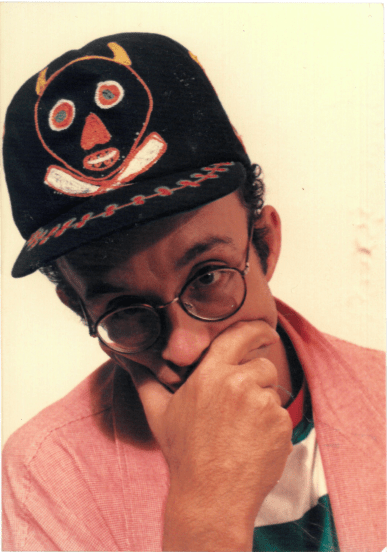
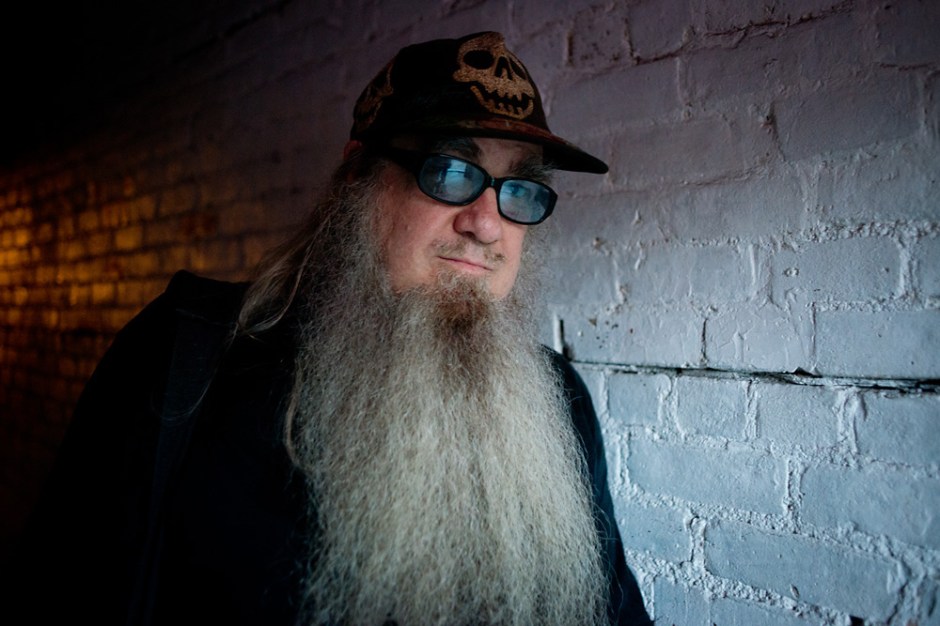
CLAYTON: – The Caps kept Elsa and me alive for a time – the Caps became my art. I documented the neighbourhood; this is my art. Like the videotape, the tape is my art and belongs to me. Same argument. I do not care that the establishment would not consider the Caps Art. My choice, not theirs. My life, not theirs. My rules, not theirs.
” I have always been an Outsider. Never fit in. My work is me, and I am it. My life is art, and my art is my life. It did take time for me to become “I”- Clayton. I did what I had to do to survive at the time. I am not a sculptor, a painter, a photographer; I am me – an artist.”
” Don’t Forget the Struggle Don’t Forget the Streets.”
DT 500 ZINE: – I have heard about your “Save NYC” open call; how is it going?
CLAYTON:– I am not going to save NYC. I can only do my part in preserving what I have, which shows what was happening in the past, the past I was involved in. Just my role and my journey. Hopefully, my point of view is educational, illuminating to others, and helpful to those interested. My duty to Elsa and I is to find a way to survive and become compatible with some events. I cannot just be against everything. I have to find a place for myself. I must carry on for Elsa, me, and those who believe in my actions. I need to continue being creative. I need to believe in tomorrow and that what I do is essential.
DT 500 ZINE:- What foundational elements do you believe are essential for fostering a strong and cohesive community, where individuals feel connected, supported, and empowered to thrive together?
CLAYTON:- Bad end of the working class- a sense of us against the world…
After nearly a decade of closure, the Gallery reopened with its original dynamic team that curated the renowned $16 Burger Show. The inaugural exhibition featured Caps and artworks from Patterson’s extensive archive. The storefront proudly displayed ten designs from the Clayton Cap Reissue project, along with original patches, books, and prints.
The $16 Burger Show, which culminated in May 2014, marked a significant cultural statement. It was not merely a nostalgic return to roots but a reclaiming of origins in the face of Manhattan’s exorbitant cost of living—a poignant commentary reflected in its ironic title.
“
“If you stop Jackson Pollock’s or Jimi Hendrix’s possible emergence, you’re killing the future. They came from the ground up. They didn’t come from the top. The top doesn’t tend to produce great stuff. So, to answer your question, I am not killing the American Dream. It is the take-over by major international corporations. I differ from the people in power who say corporations are people. Corporations are not people. “
DT 500 MAG: – As the vast and hard-working American nation voted at the end of 2016, inaugurating Mr. Trump on January 20th against the odds, what are your reflections on his lasting influence, for better or worse, on the future of the USA?
CLAYTON: – Trump showed how dysfunctional, corrupt, incompetent, lazy politicians and the media are today and how out of touch they are with the American people. And even now, after the election, the politicians and the media still do not understand the pain and suffering that is going on in the States. The death of the middle class and the brutalities of the poor are only two glaring examples. After Obama and now Trump, who both represented change and how much hurt and dissatisfaction Americans have towards the system, add in Bernie. We have to understand these are dangerous times. Something negative is bound to happen. Especially after people realise Trump is only selling a dream and has no desire to fulfil his promises. Hang on, I just hope the ride is not too rough.
DT 500 MAG: -Thank you, Clayton, for graciously sharing your expertise and guidance with our project. Your contribution means the world to us here at the Downtown 500 crew, and we deeply appreciate your support and wisdom. Warm regards and heartfelt gratitude from all of us! #Rapture!
“What a man can be, he/she must be.”
Clayton clearly notes:
“The small independent restaurants and coffee shops are where energy was generated, and ideas came together. Like when creating the magazine, you don’t do it alone–many people are talking: let’s make a magazine! How can we make a magazine? Oh, I don’t know, you do this, and I’ll do that. Oh, I found a printer, I can write, this guy takes pictures – it’s energy, not from the rich people or intellectuals, it’s from the bottom, the ideas and the pushing and the turning… And that’s where the greatness comes from. Otherwise, the magazine wouldn’t be there. “
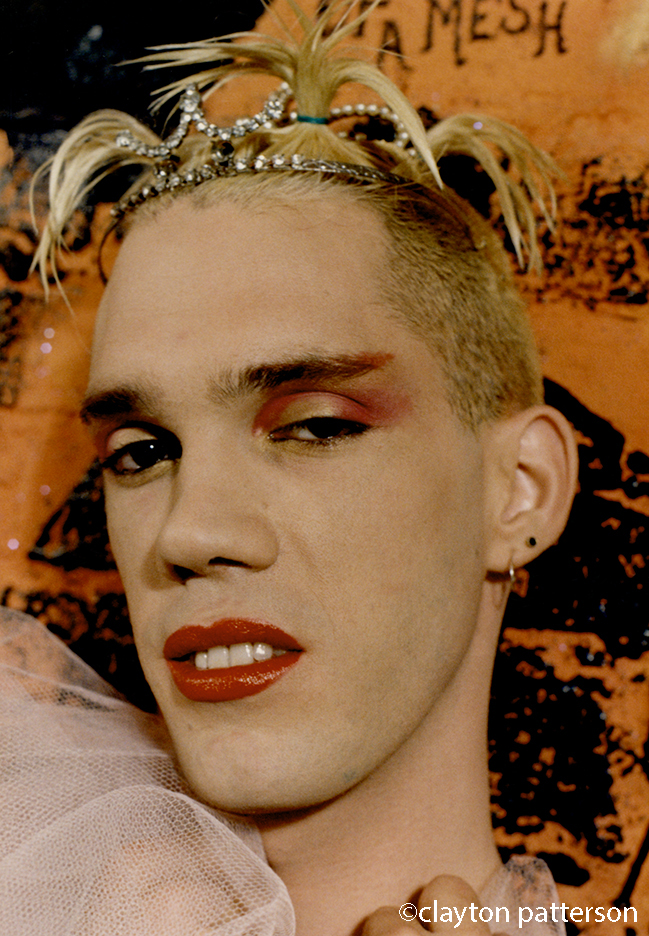
Even today, Clayton Patterson continues his active involvement in the community by supporting the youth of Downtown Manhattan. In his latest endeavour, Clayton is curating for a promising young band named DAMEHT. Much like Andy Warhol’s pivotal role with the Velvet Underground, Patterson acts as an artistic ringleader, offering his wealth of experience and expertise to help shape the band’s identity.
Just as Lou Reed and his bandmates were fixtures at Warhol’s Factory in the 1960s, DAMEHT’s members—Rivington Starchild, Roman Lewis, and Lucas Garzoli—now converge around Patterson’s longstanding Lower East Side home, The Clayton Gallery & Outlaw Art Museum.
DAMEHT guys about Clayton:
“He embodied in his work what many people strive – to be themselves even in hard times – as an oppressive force behind him which tried to push him out from remaining true to himself.”
His journey wasn’t without its challenges. Patterson’s steadfast defence of his art led to clashes with authorities, notably during the infamous 1988 Police Riot incident, during which he stood defiant against attempts to seize his footage. “I stood firm,” he recounts, “arguing that my work, my art, was my own.”
Beyond documenting the LES’s evolution, Patterson has been a vocal advocate for causes close to his heart, from tattoo legalisation to involvement in the NO!ART movement, a radical avant-garde response to societal norms.
Today, Patterson continues to champion artistic expression through his Gallery & Outlaw Art Museum, a haven for provocative, outsider art challenging establishment conventions. “I’m not here to save NYC,” he reflects pragmatically, “but to preserve its essence and inspire future generations.”
As our conversation draws to a close, Patterson leaves us with a poignant reflection on the power of grassroots creativity. “Greatness,” he asserts, “springs from the streets, from the cafes and studios where ideas collide and evolve organically.”
Clayton Patterson’s legacy is a testament to the resilience of individuality in the face of urban change, an enduring symbol of the LES’s unyielding spirit.
For further information or interviews, please contact:
DT500 Zine Press Office
Email: dt500mag@gmail.com
DT500 Zine
DT500 Zine celebrates the unconventional and extraordinary voices shaping contemporary culture from the heart of the city to the edge of innovation.
Interview by Arthur Sopin
Photography by Clayton Patterson, Johnny De Guzman
Special thanks to Andreas Roed, Liz Cornine, Justin Moran, Jorge Liloy, Solva
 #dt500mag